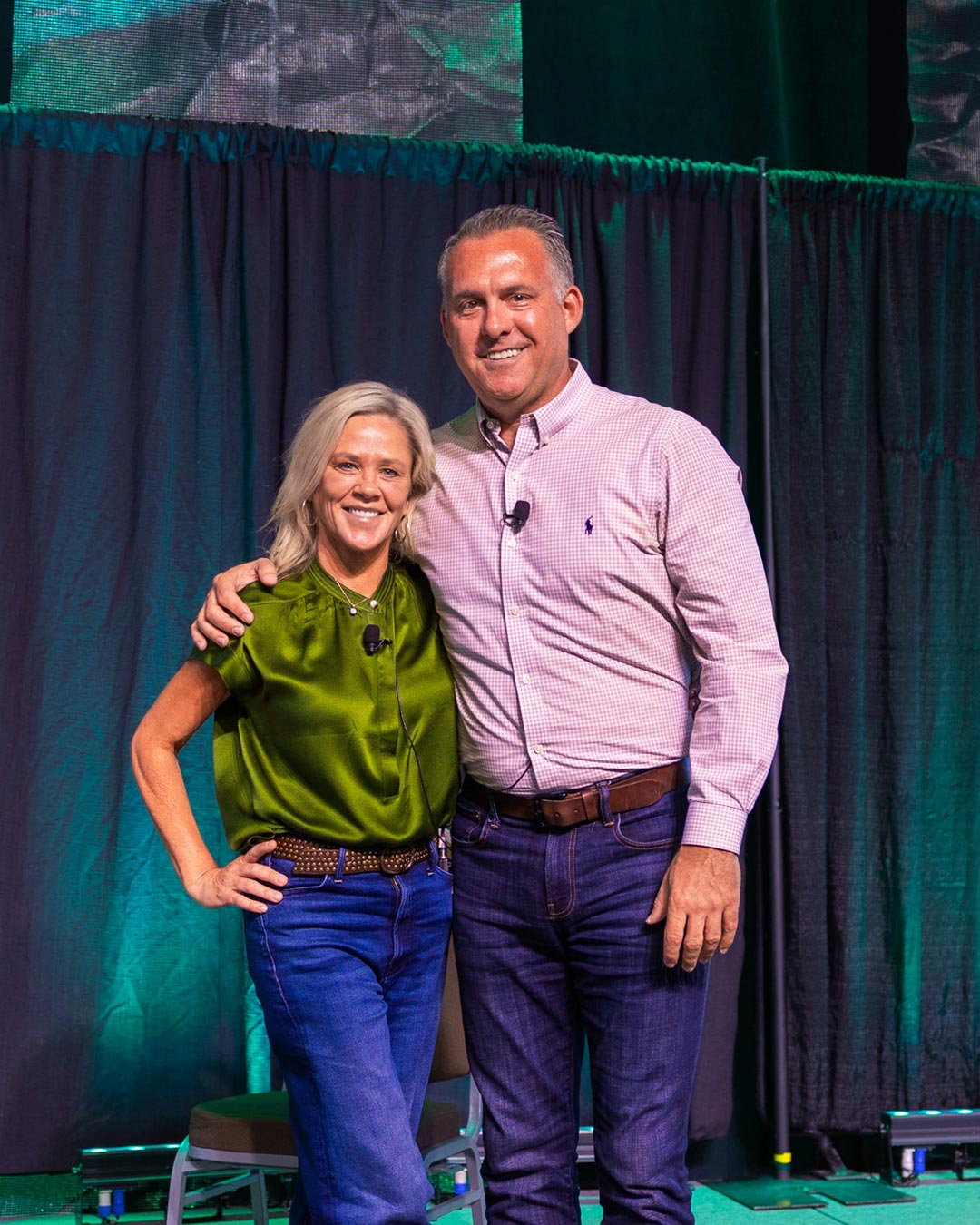
I am honored to serve as the new CEO of American Pistachio Growers. Leading this fabulous team, dedicated to helping our growers and introducing more people to the world’s best snack, is a dream come true for me. I grew up in 4-H and come from a family of farmers, so I’ve seen what makes agriculture such a special industry. I am also no stranger to the consumer products and wellness space, with more than two decades of experience building brands and guiding organizations through periods of transformation.
This is a dynamic time for the industry. The good news is that pistachios are more popular than ever! But we are in the midst of a difficult harvest. While the crop will improve in 2027, other serious pressures remain. Water is scarce. The cost of farming keeps rising. And a difficult regulatory and tariff environment makes the rewards for our work unpredictable.
I’ve been spending a lot of time meeting with growers, getting to know you all and learning what matters most. I hear you. We have some challenges ahead of us and must be intentional with how we respond. This means being more strategic with our resources and focusing on how and where APG can have the greatest impact. We’re already putting plans into motion, and I’d love to invite you to see what we’re doing at the Pistachio Industry Annual Conference in Indian Wells, CA from February 15-17.
I am making it a priority to connect with as many growers as possible, and I want to hear from you. Please reach out if you would like to meet one-on-one – here is my cell number (857)540-1787. I will also be attending as many industry events as possible over the next six months, so if you see me, please introduce yourself. I would appreciate the opportunity to get to know you and hear your perspective. I look forward to building on the momentum and continuing to ensure the health of this great industry.


Mike Forbes
CEO, American Pistachio Growers
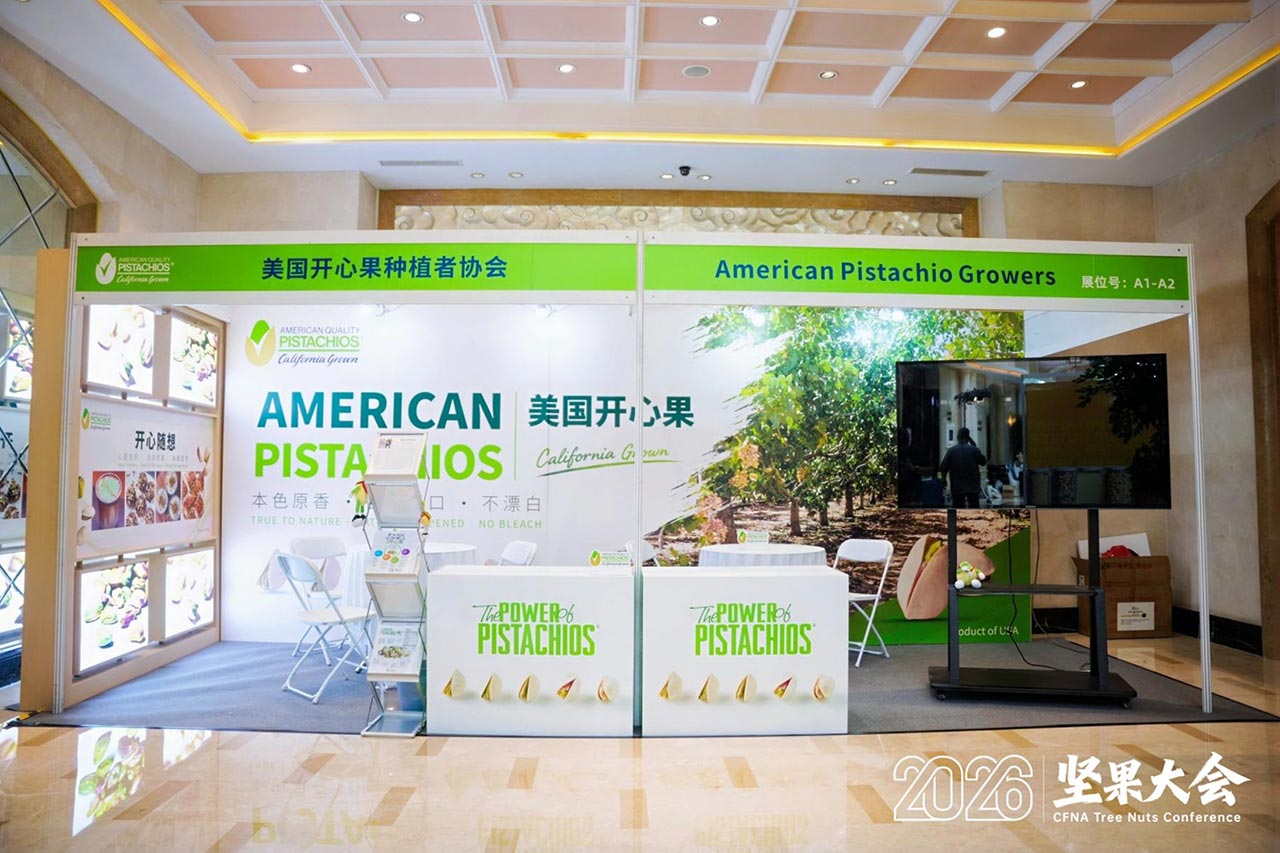
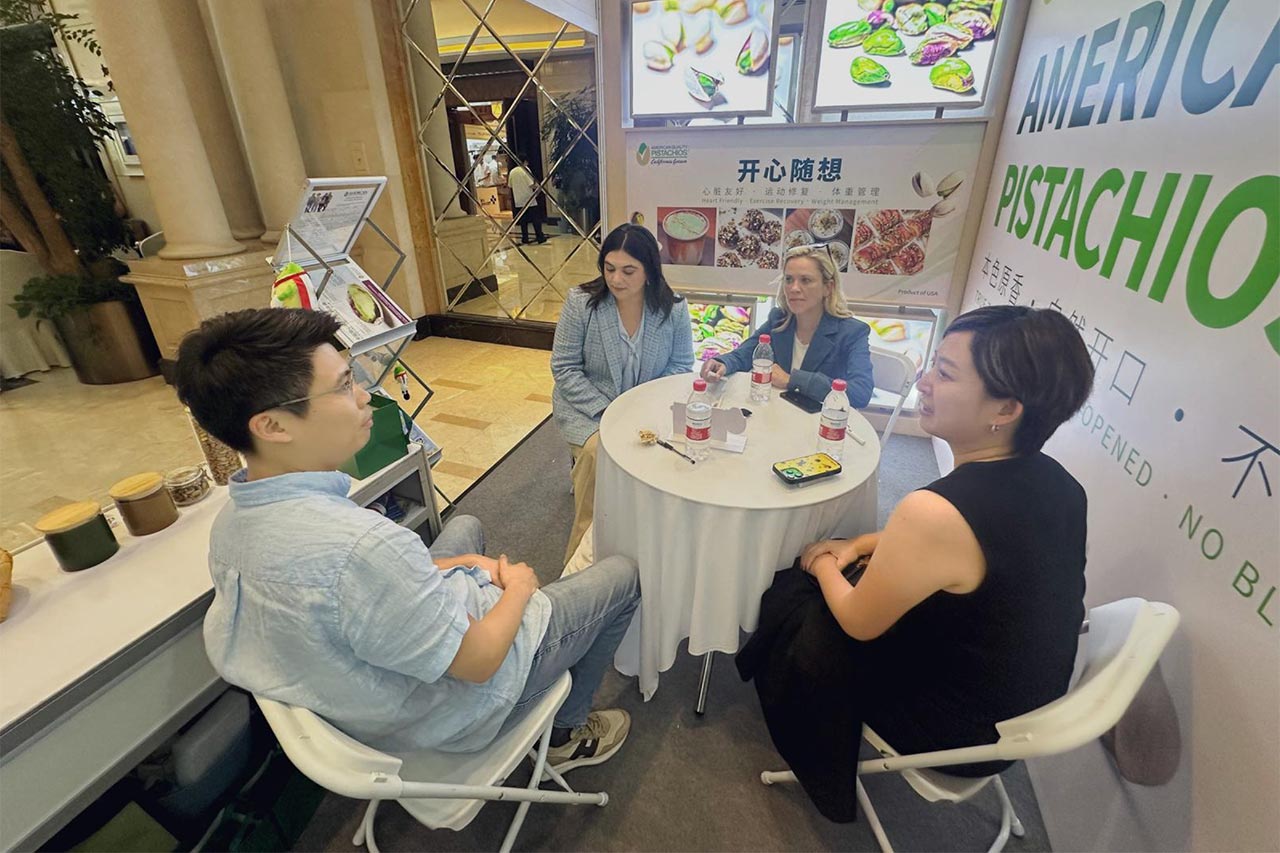
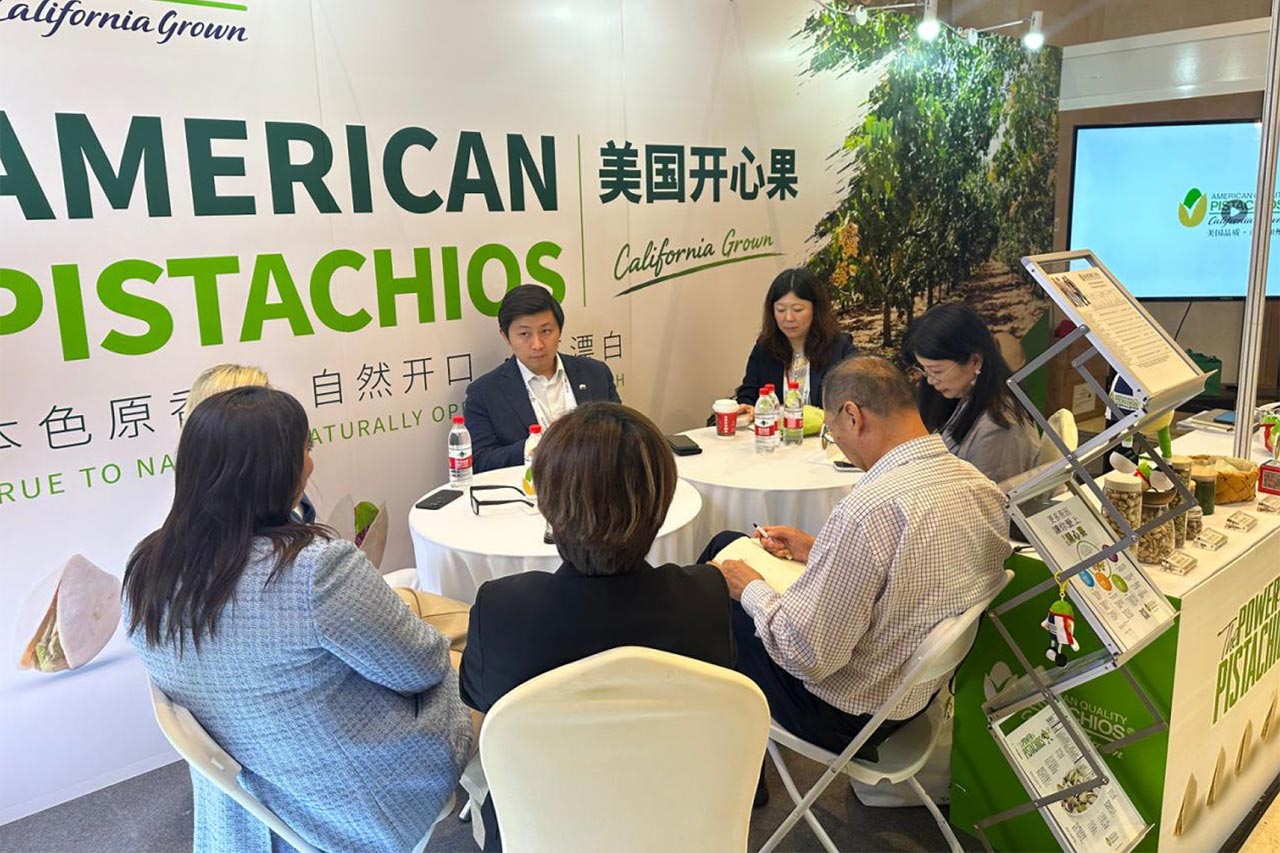
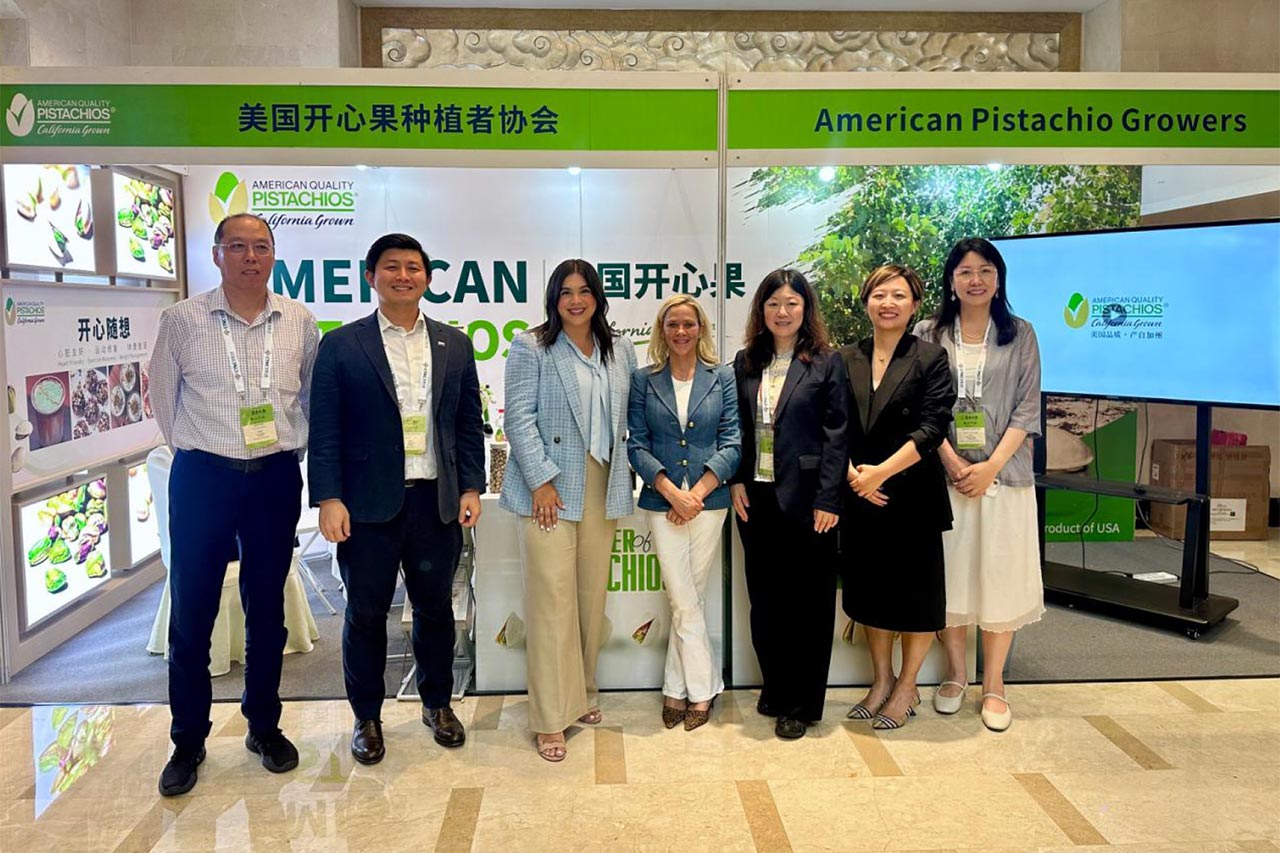
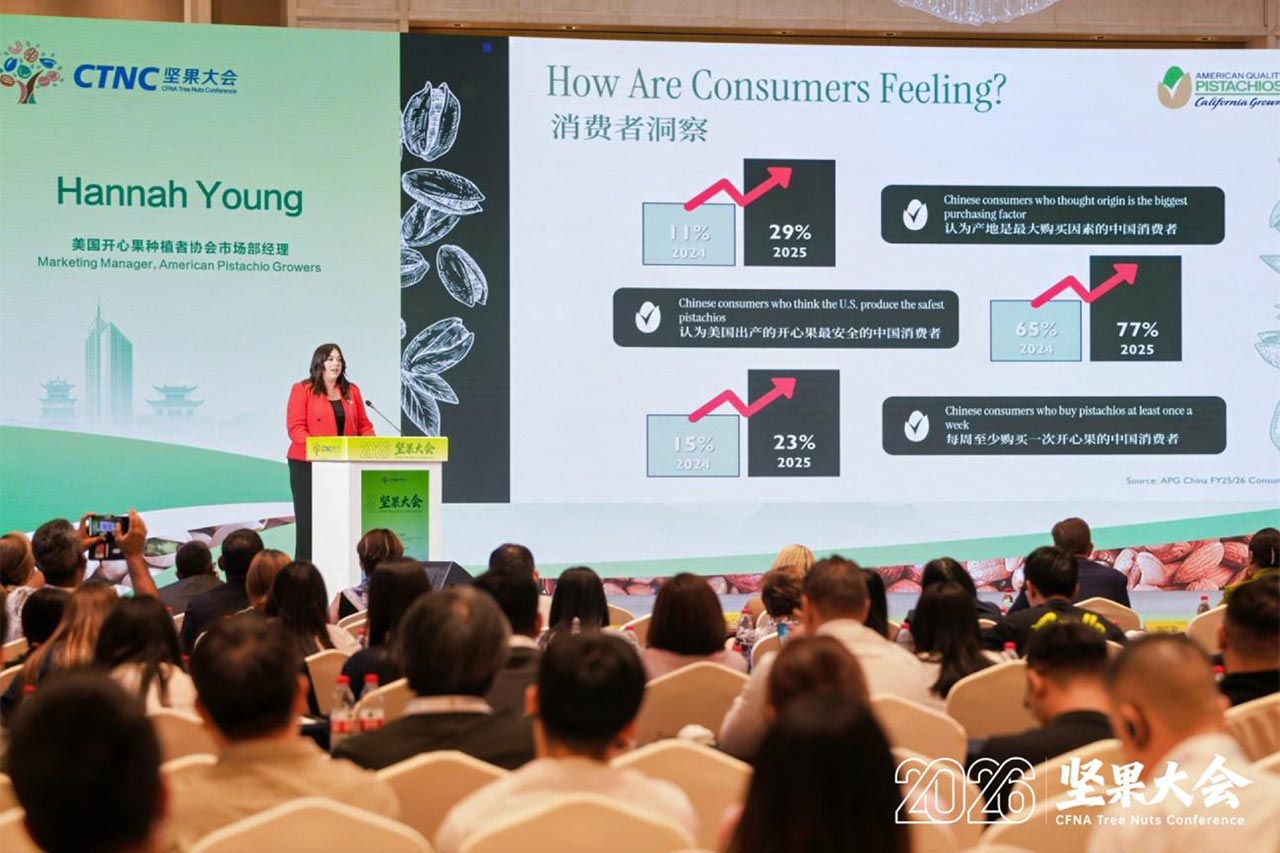
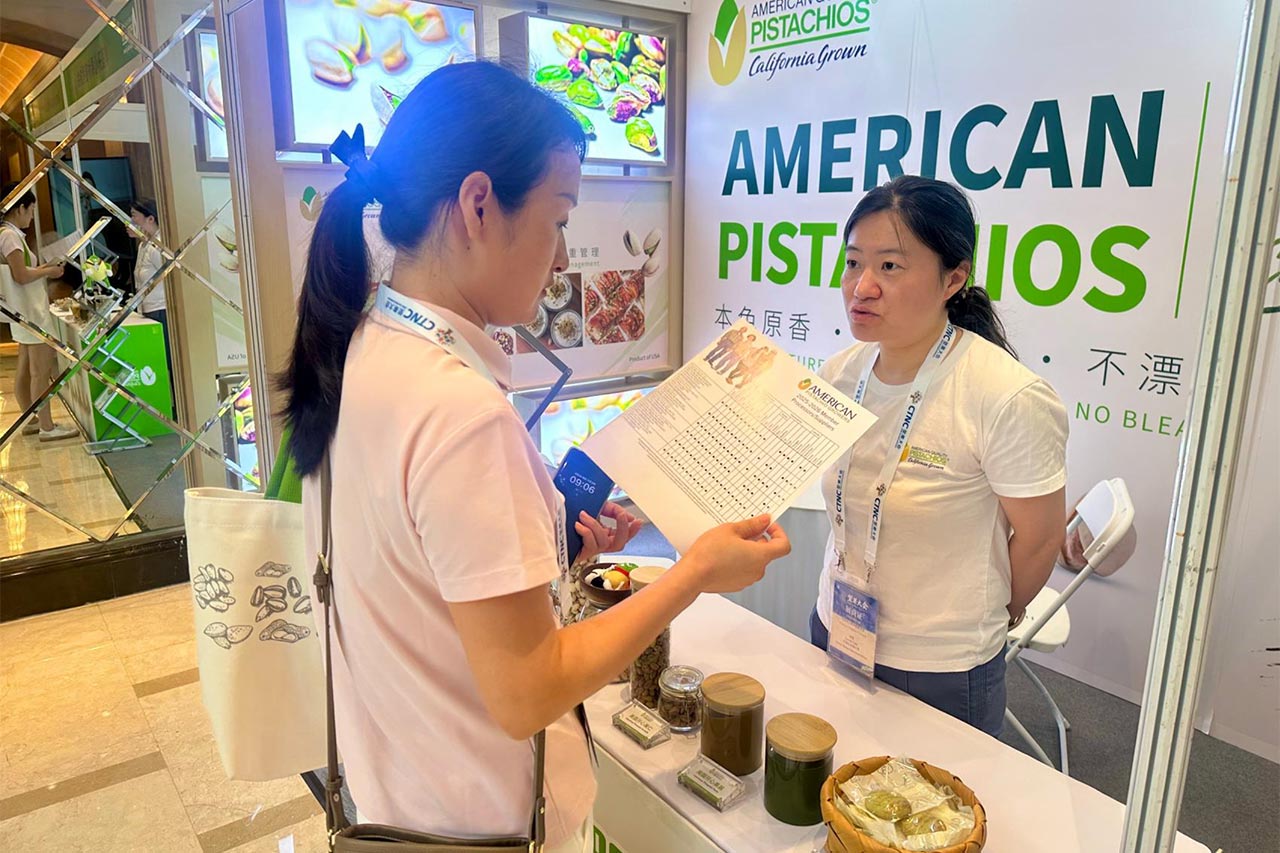
China remains one of the most critical export destinations for American pistachios, and American Pistachio Growers (APG) continues to proactively engage key buyers, importers, and processors to reinforce demand and highlight market potential. From August 5–7, APG participated in the 19th China International Tree Nuts Conference (CITNC) held at the Xingfu Lake International Conference Center in Yiwu, Zhejiang Province. The event brought together more than 800 industry professionals representing over 20 countries and regions, serving as a premier platform to deepen commercial relationships across the global nut trade.
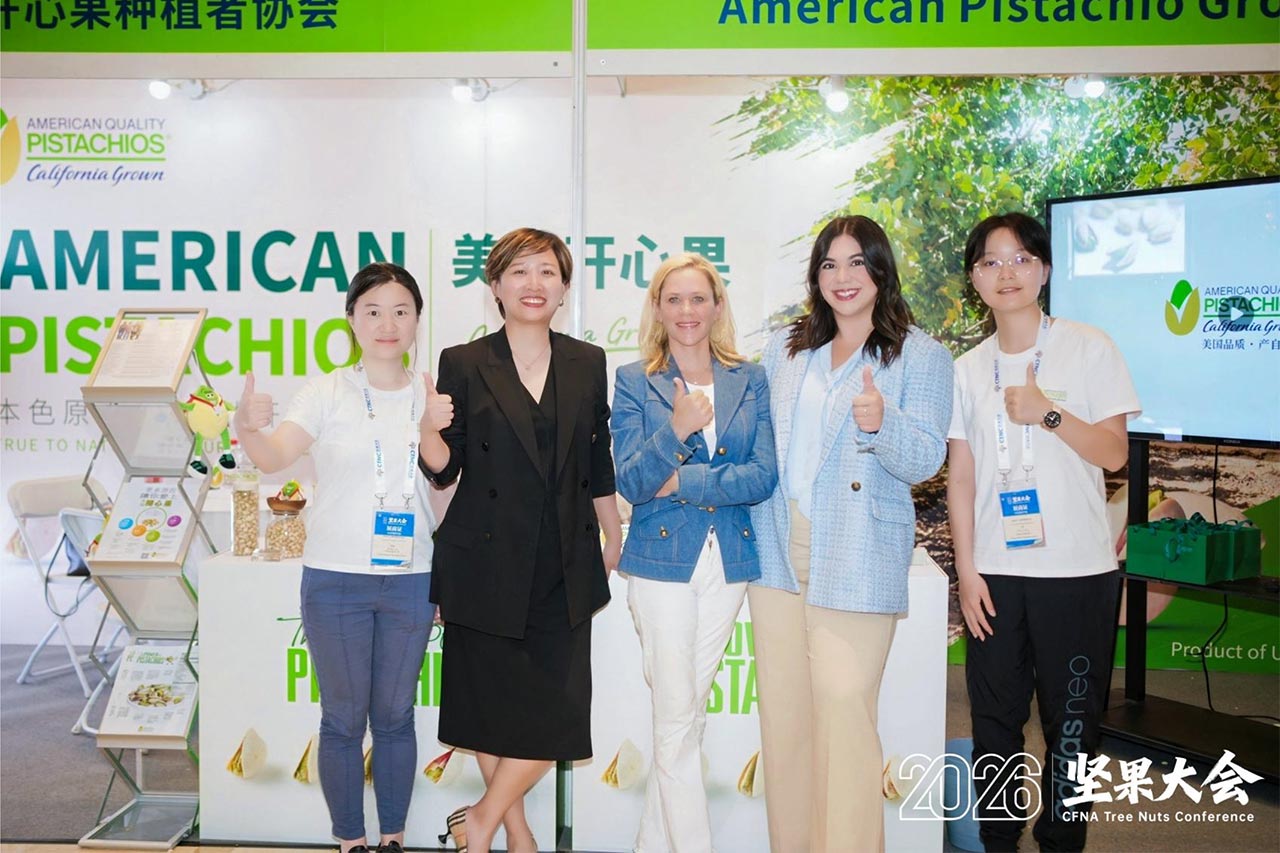
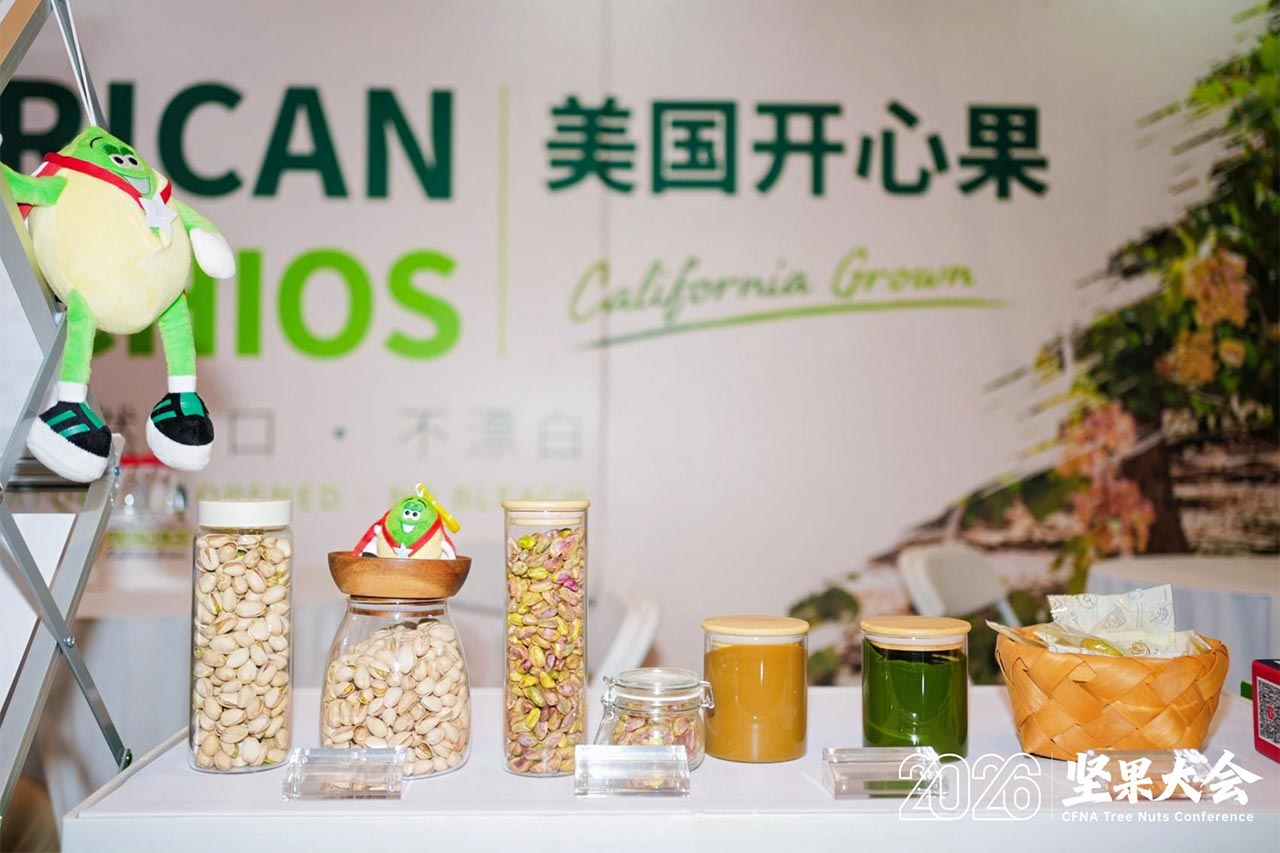
Throughout the three-day conference, APG showcased American pistachios through a prominent 18-square-meter exhibit booth featuring samples across in-shell, kernel, and paste formats. In addition to meeting with trade visitors and securing 50 qualified trade leads, the APG team held strategic bilateral discussions with key commercial partners—including Foshan Gaoming Great Eagle Food, a major processor and importer sourcing U.S. pistachios—and coordinated on-site with USDA Foreign Agricultural Service officials from ATO Shanghai and ATO/OAA Beijing. APG also supported the conference as an official sponsor, gaining high-visibility branding throughout the venue’s networking areas.
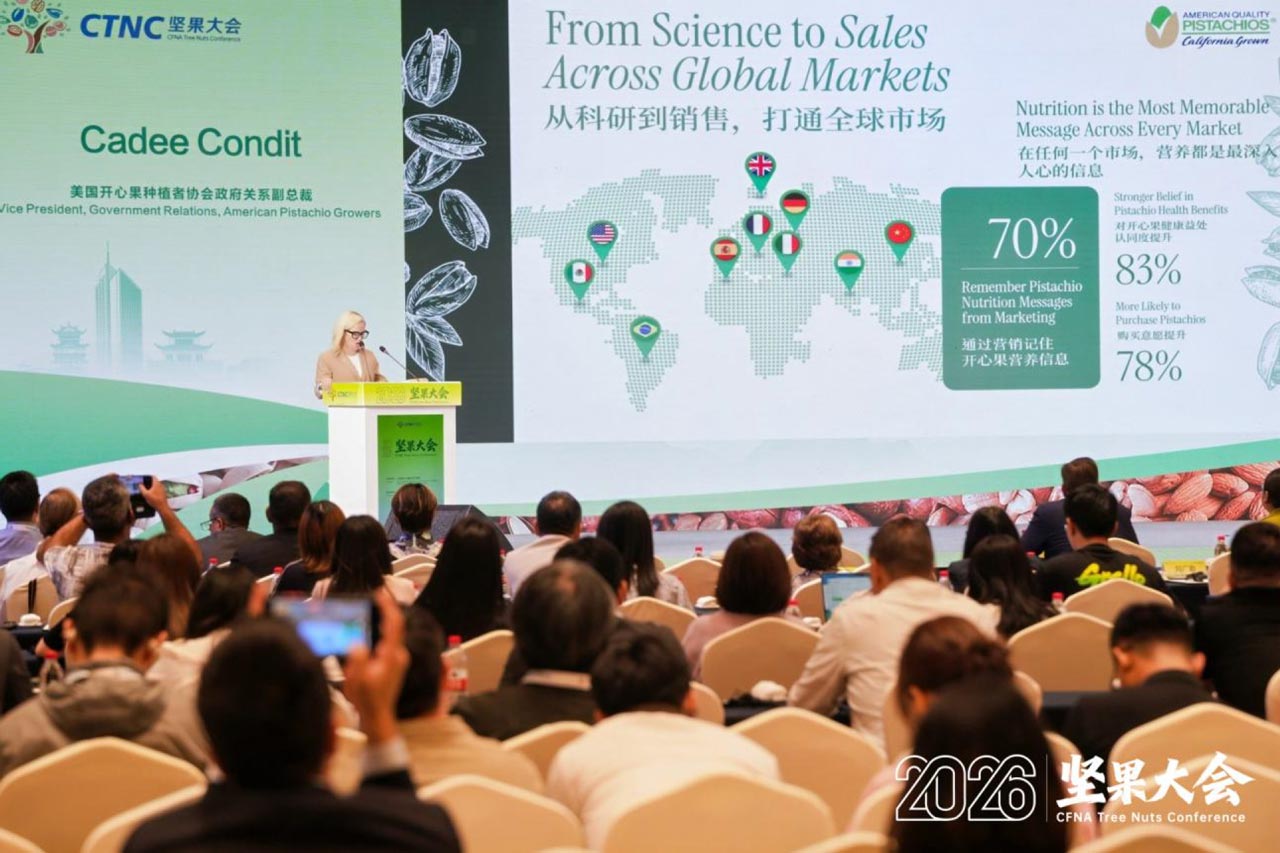
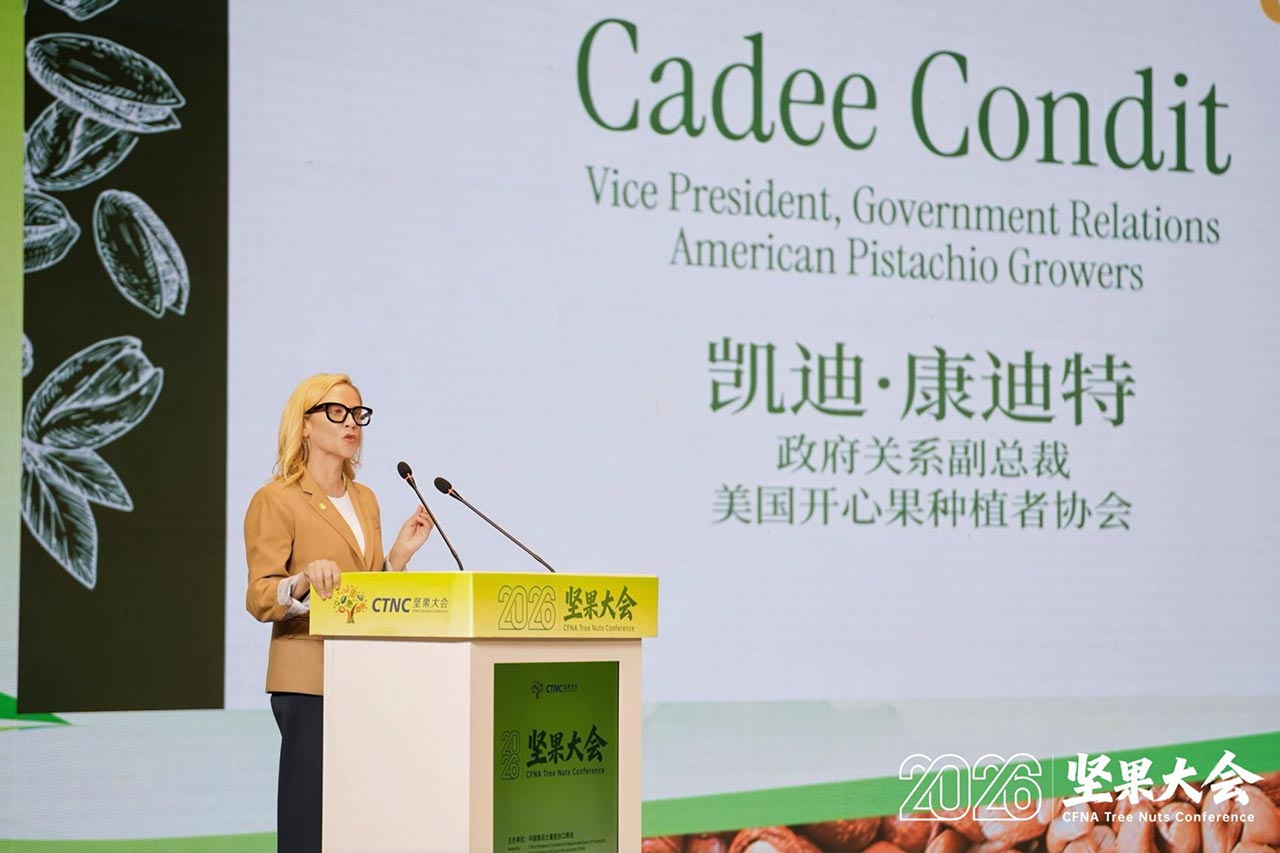
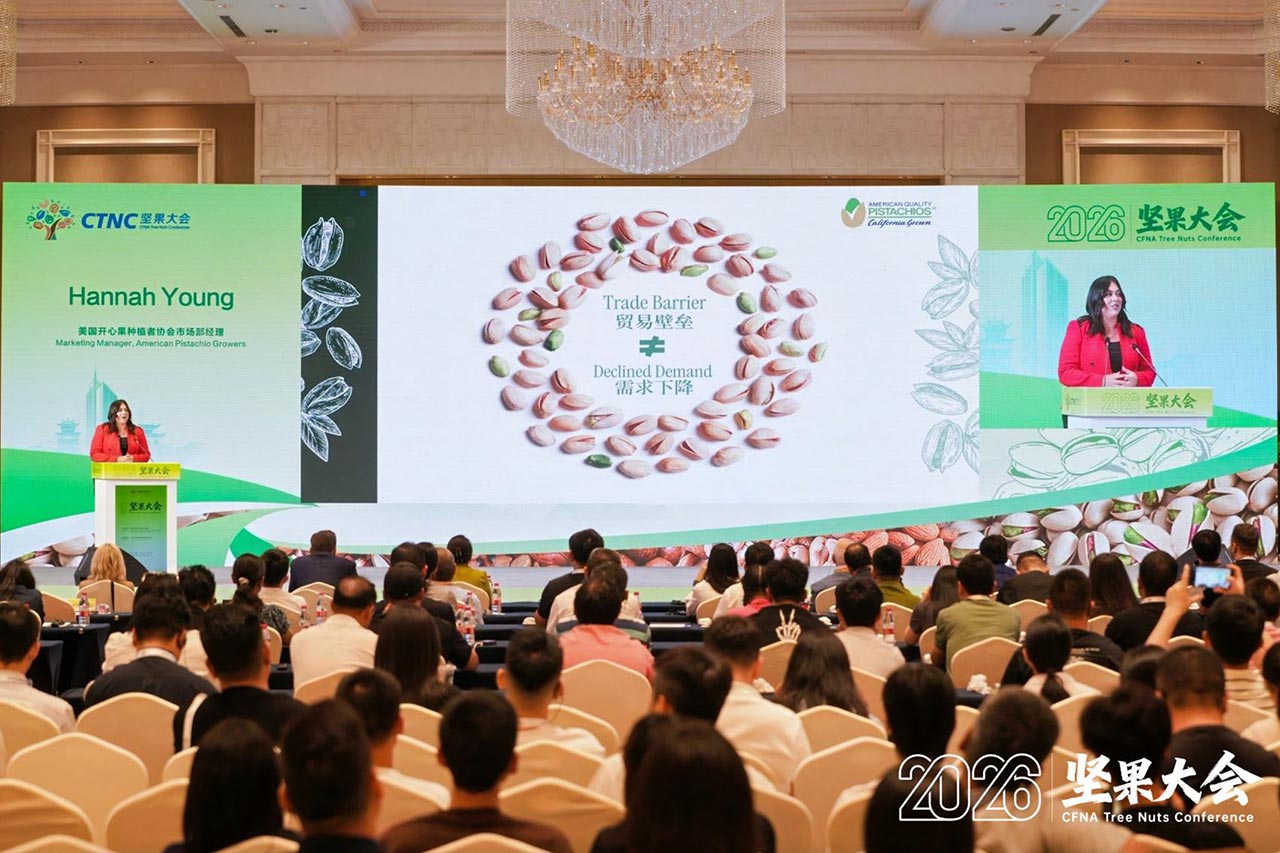
On the main stage, Cadee Condit, Vice President of Government Relations, and Hannah Young, Global Senior Marketing Manager, delivered keynote presentations to hundreds of international stakeholders. Their sessions highlighted how APG’s ongoing nutrition research supports broader market education and commercial applications, alongside an overview of APG’s marketing initiatives in China. The sessions also provided valuable market intelligence, offering direct insights into competitor crop trends from Iran and Turkey.
Trade feedback gathered throughout the conference confirmed that demand for American pistachios remains exceptionally robust. While buyers are monitoring expectations of a smaller U.S. crop and awaiting new-crop pricing before finalizing purchase orders, several companies reported purchasing plans are already lined up. Notably, interest was especially strong for kernels, pieces, and mixed-grade pistachios, driven by expanding applications across China’s dynamic bakery, confectionery, beverage, and dessert sectors. These insights reaffirm the strong positioning of American pistachios and provide clear direction as APG continues to drive trade engagement and value-added market development across China.
APG and OFW had another busy quarter in Washington, D.C., continuing to build relationships with Congress, USDA, and key federal agencies. A highlight was participating in Secretary of Agriculture Brooke Rollins’ Ag250 Celebration in July.
Our advocacy continues to be well received, and we remain focused on making sure pistachios have a seat at the table as Washington works through a very uncertain environment. Trade remains especially important to our industry. With approximately 80% of our crop exported worldwide, tariffs, international conflicts, market access, and higher input costs can significantly impact our growers.
The Farm Bill also remains a major focus. On September 16, the Senate Agriculture Committee advanced its version of the 2026 Farm Bill. With limited legislative time remaining this year, getting a final Farm Bill completed will be challenging. We will continue working with OFW to ensure specialty crops—and pistachios specifically—are part of the conversation, particularly on risk management, trade, research, and economic assistance.
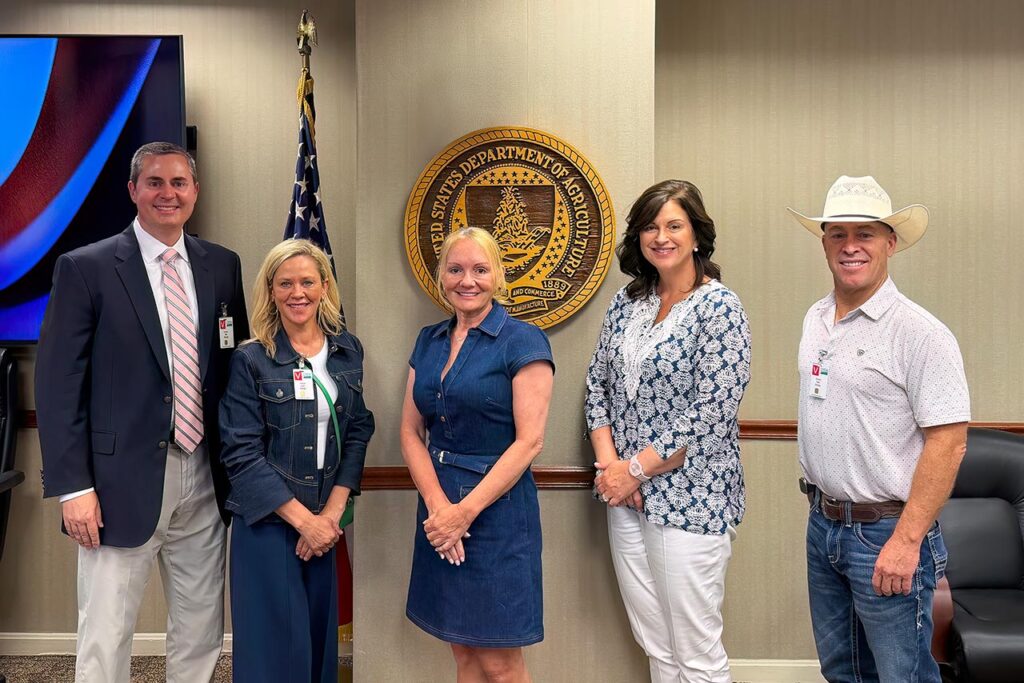
As always, our approach in Washington remains bipartisan and relationship-focused. There is a lot of uncertainty right now, both domestically and internationally, and we will continue to stay engaged and make sure APG is positioned to respond quickly when opportunities or challenges arise.
One highlight of the quarter was APG’s participation in Secretary Rollins’ Ag250 Celebration at George Washington’s Mount Vernon Estate in Alexandria, Virginia.

William Bourdeau and I attended on behalf of APG, along with the OFW team. Congressman Adam Gray and Congressman Jim Costa joined us. More than 700 people attended, and we provided pistachio samples to guests. We even had pistachios featured in one of the desserts—a great opportunity to showcase our industry and product.
While we were in Washington, William, Eric Steiner, and I also attended a PAC dinner for Congressman Juan Ciscomani and met with leadership from USDA’s Risk Management Agency (RMA). That meeting was especially important given the difficult crop year our growers have experienced and the growing importance of crop insurance.
We discussed ways APG and RMA can work more closely together to ensure crop insurance products better reflect the realities of pistachio production. That relationship has already moved beyond Washington—we are hosting RMA officials in California in early October for a firsthand look at our industry and an opportunity to hear directly from growers.
This is exactly the kind of relationship-building we want to continue: getting the right people out of Washington, into our orchards, and in front of our growers, so they understand our industry before decisions are made that impact us.
Throughout the summer, American pistachios popped up at some of London’s hottest events and destinations, bringing the brand directly to British consumers through a fully branded trike and sampling bins.
APG distributed samples at three high-profile London locations: Crystal Palace, ahead of the Tom Jones concert; South Kensington, during the BBC Proms; and Battersea Park, during the Battersea Park Concerts.
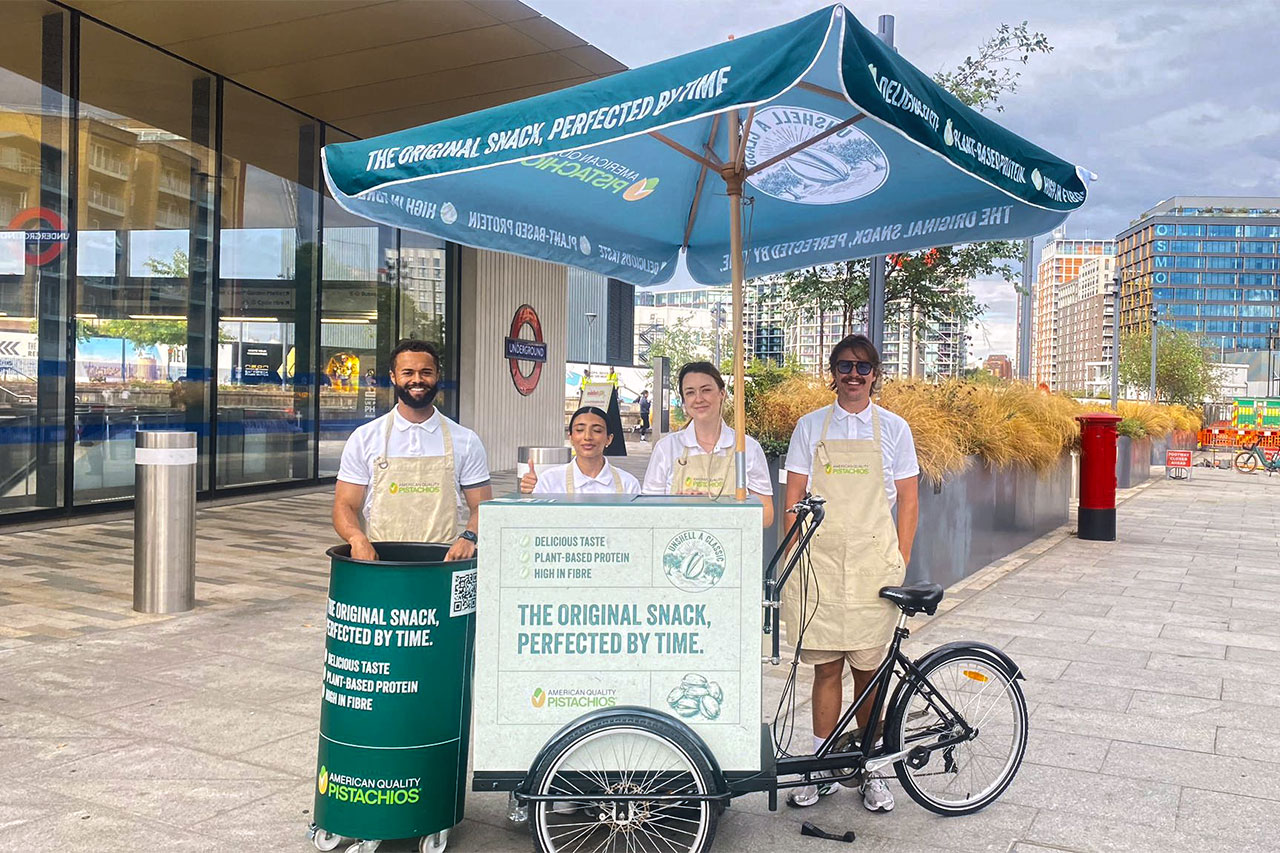
The activation was a tremendous success, with 9,900 sample packs distributed across the three locations. By putting American pistachios directly into consumers’ hands, the campaign not only generated valuable product trial and brand awareness, but also provided an opportunity to highlight the nutritional benefits of American pistachios.
The summer activation helped bring American pistachios to life in some of London’s busiest and most engaging settings—connecting the product with consumers when they were out enjoying the city and creating memorable opportunities to discover the taste and benefits of American pistachios.
This August, American pistachios took center stage in “Stay Fresh with American Pistachios,” a project that brought together three Italian food creators to showcase the versatility and unexpected ways to enjoy American pistachios through a series of summer recipes.
Silvia Agresti kicked off the summer campaign with a refreshing American Pistachio Smoothie – a fresh and energizing recipe perfect for hot summer days. Sara Della Tommasa brought to the table a Crostone with Robiola and American Pistachio Pesto, topped with chopped American Pistachios for a delicious combination of creamy and crunchy textures. Rounding out the campaign, Elisa Nicolato wowed with homemade American Pistachio Crackers, highlighting a simple and portable snack ideal for the beach or an outdoor picnic.
Together, three recipes demonstrated the versatility of American pistachios and offered Italian consumers fresh inspiration for incorporating them into their summer routines.


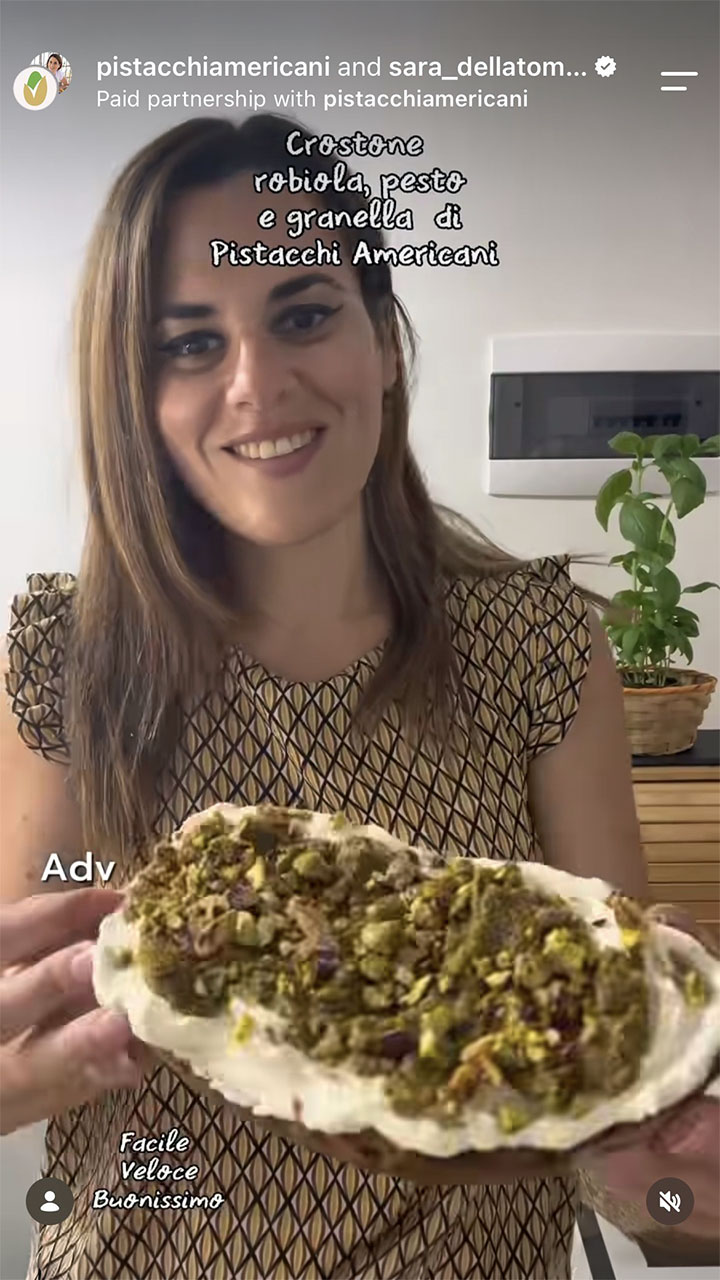
Published in collaboration with @pistacchiamericani, the Reels generated impressive results, reaching more than 500,000 views with 70,000 engagements, extending the reach of American pistachios to a highly engaged Italian food audience.
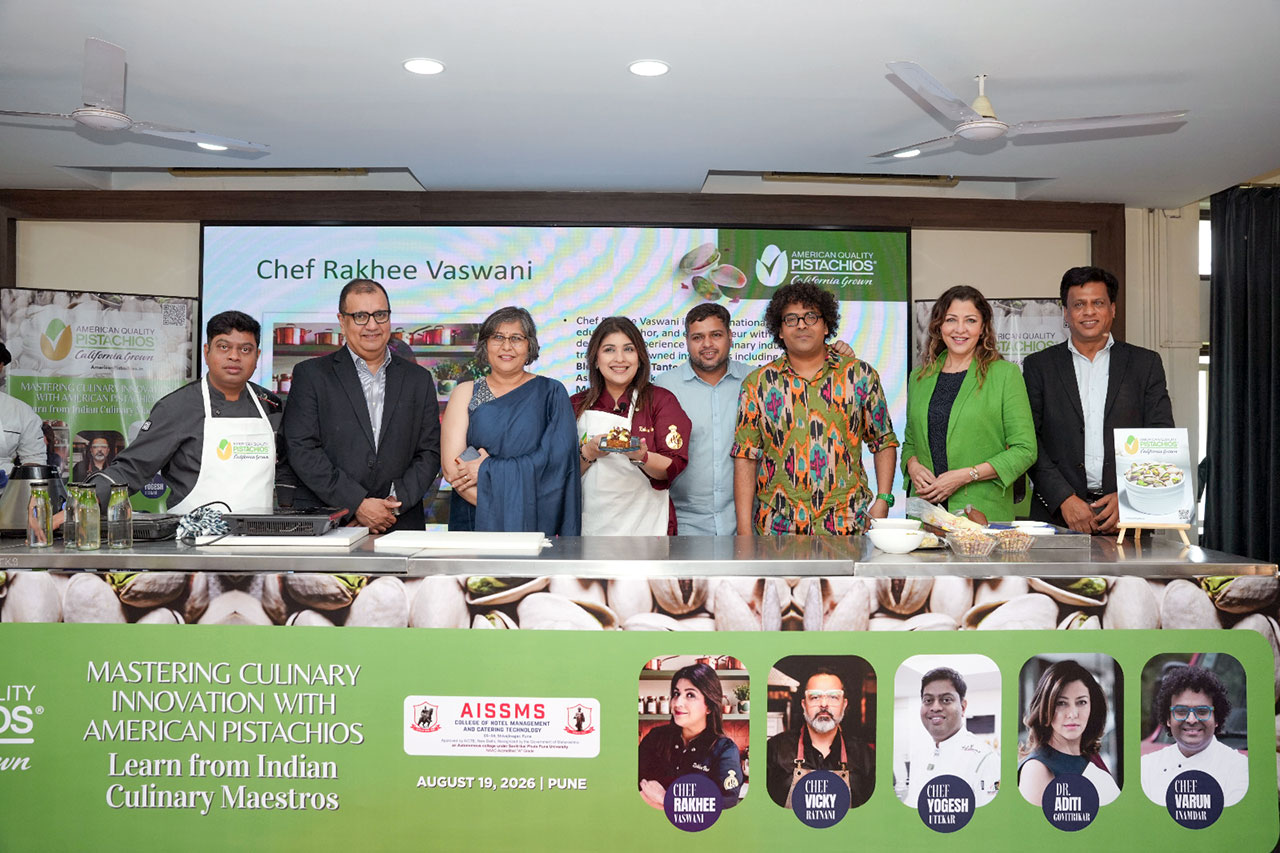
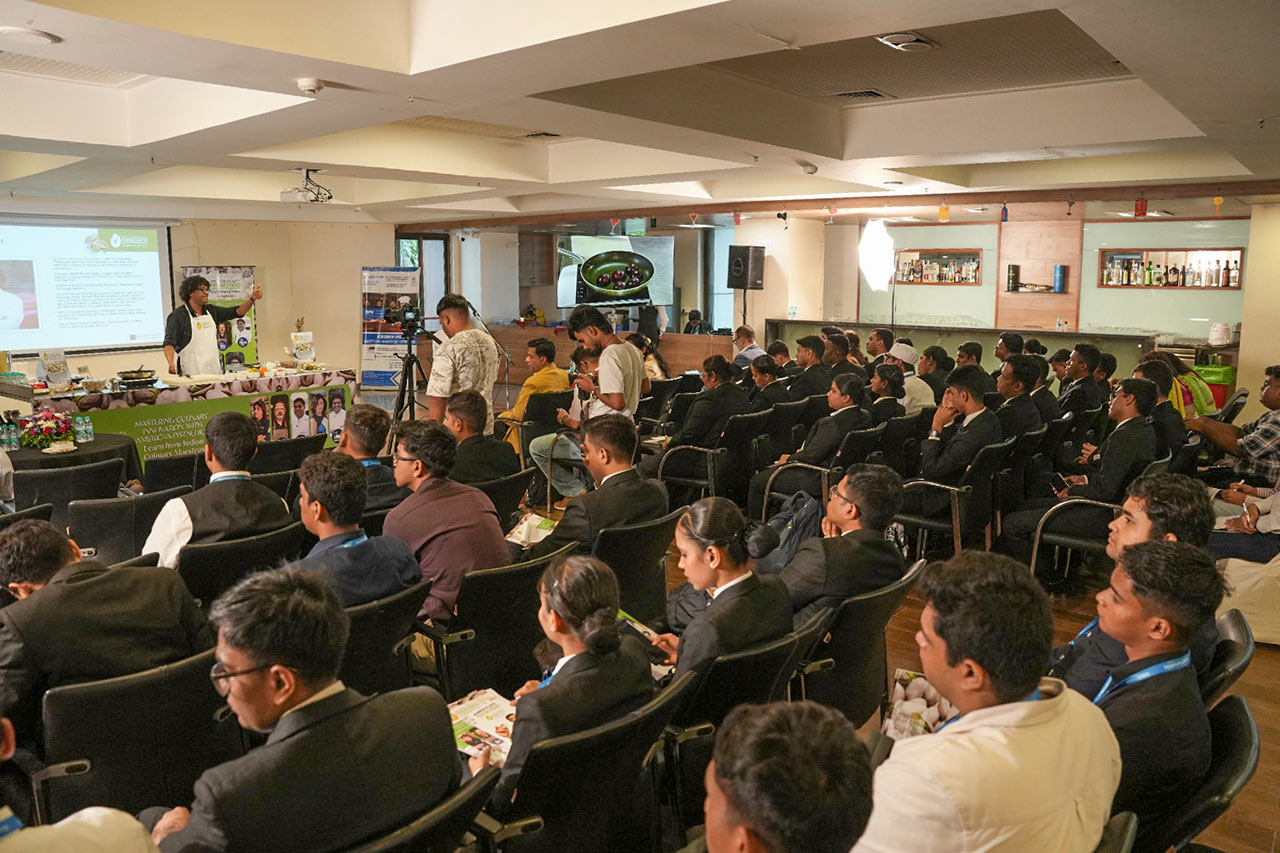
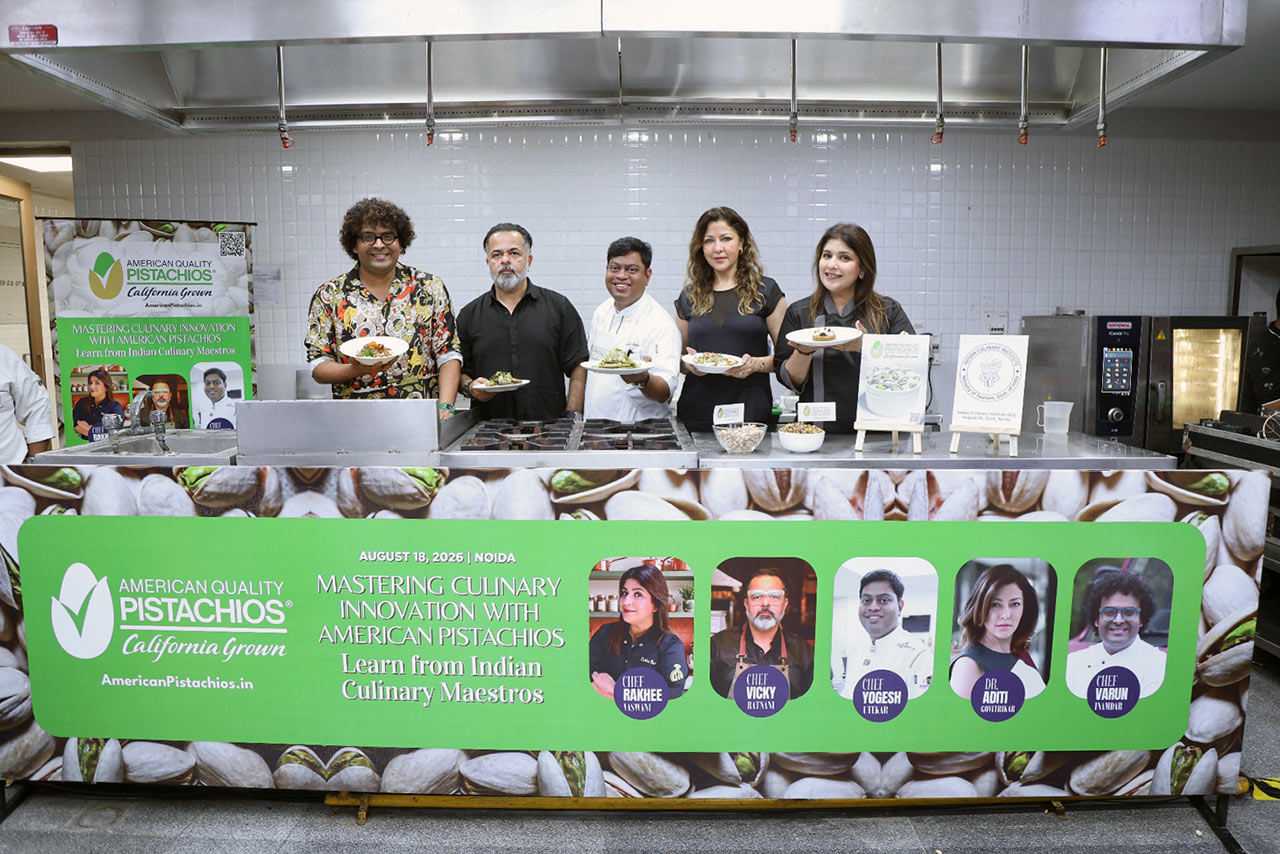
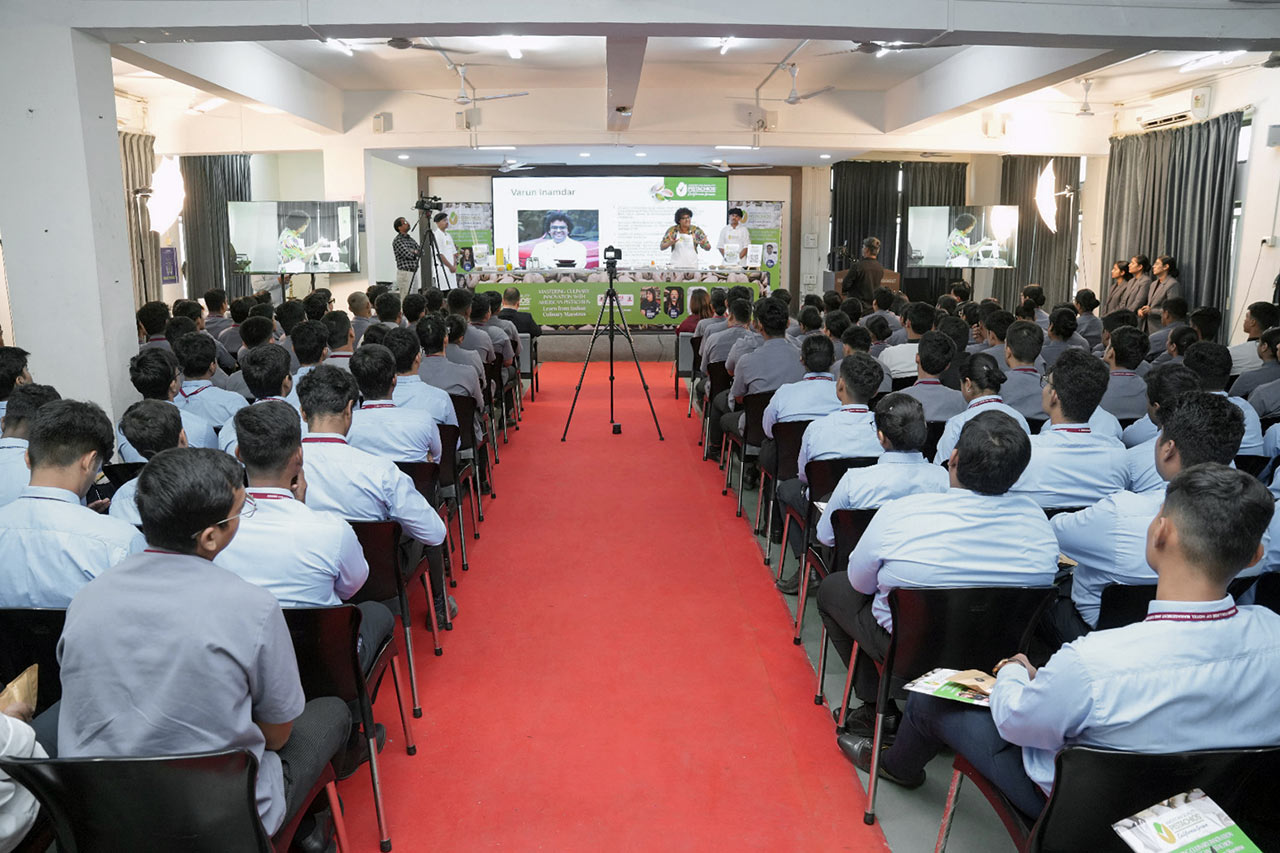
APG and our in-country representatives in India are excited to share the success of the inaugural American Pistachios Culinary Training Programme—an initiative made possible through funding from USDA’s Emerging Markets Program (EMP) and designed to increase awareness and use of American pistachios in India.
The week-long program was held August 17–21, 2026, across five leading hospitality and culinary institutes in India, training more than 530 culinary students.
Led by experienced chefs and health professionals, the sessions introduced students to the nutritional benefits, versatility and innovative culinary applications of American pistachios, demonstrating how the ingredient can enhance flavor, texture, nutrition and visual appeal across both traditional Indian and global cuisines.
Student response was extremely positive: 96% said the program increased their awareness of the culinary uses and health benefits of American pistachios, while 90% said they intend to use pistachios in future recipes. In addition, 86% reported that their institutes plan to continue educating students on the use of American pistachios, creating an opportunity for sustained exposure among the next generation of culinary professionals.
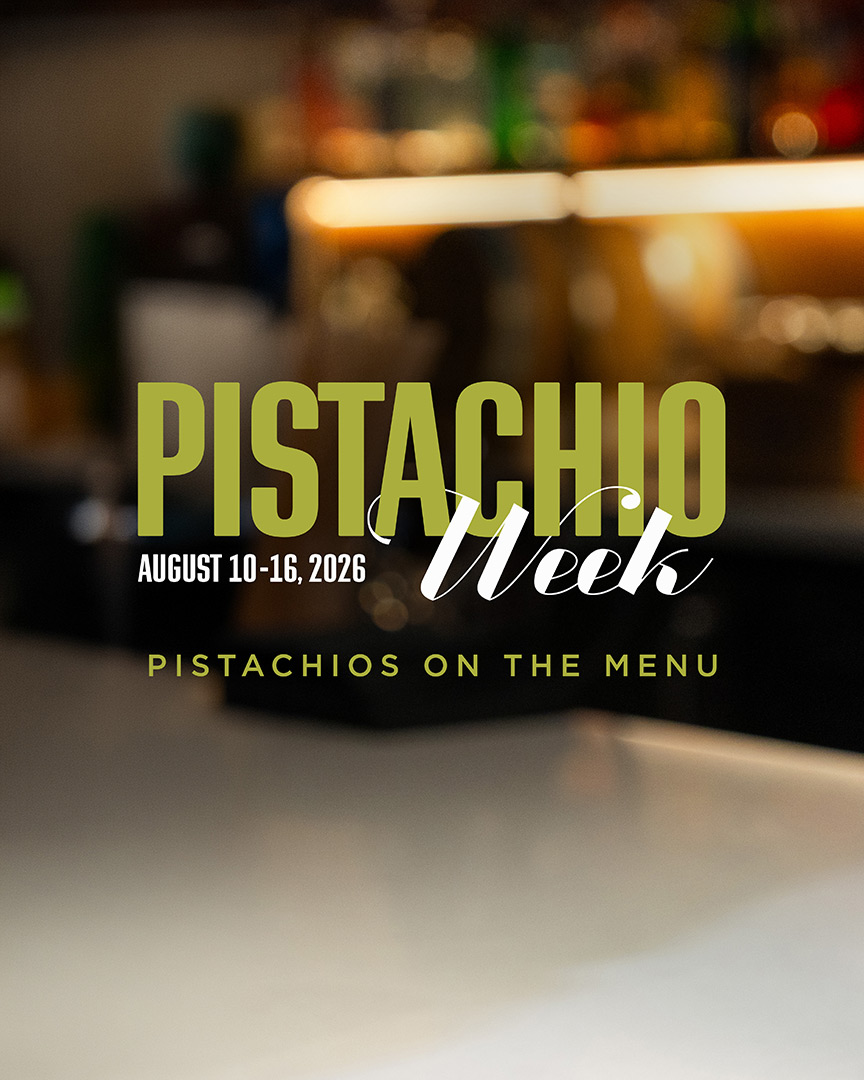
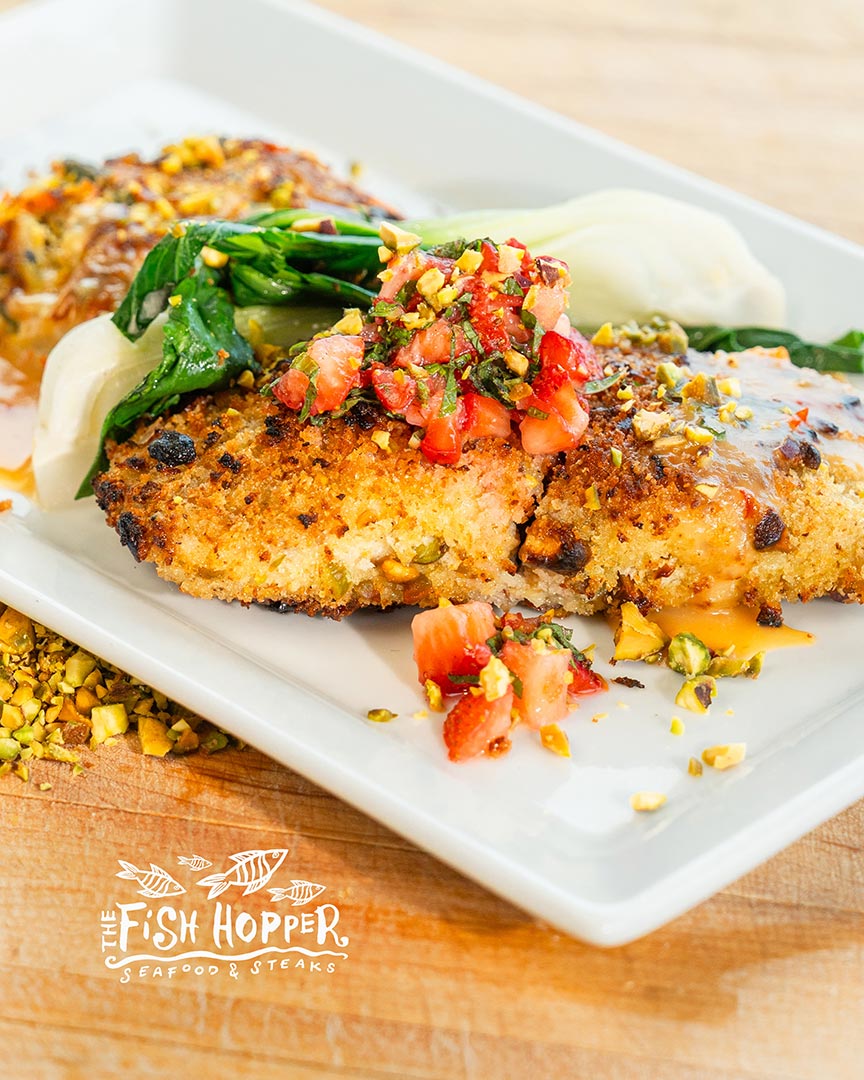
The 5th annual Pistachio Week returned this year with 26 participating restaurants across 10 cities in California, giving industry friends and local consumers the opportunity to experience American pistachios through creative dishes and menu offerings throughout the week. The program also welcomed several new restaurant partners, helping APG continue to build relationships with chefs and foodservice professionals while showcasing the taste and versatility of American-grown pistachios.
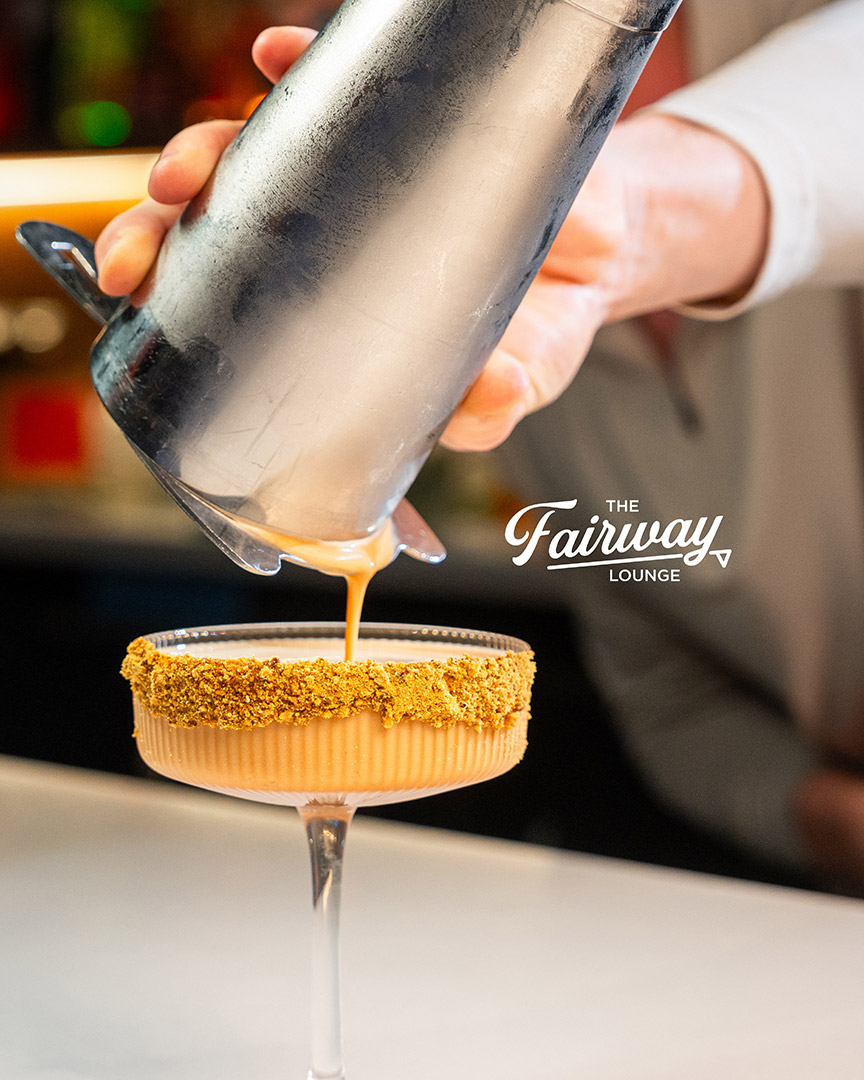
The week was supported by restaurant promotions, local media and social media, as well as a growing number of Pistachio Week events. APG hosted a membership event at The Fairway Lounge, while the promotion also inspired separate industry events, including the Women in Tree Nuts Pistachio Week Mixer and a pistachio-themed dinner hosted by Mulvaney’s B&L in Sacramento. Together, these activities helped build excitement around Pistachio Week, support participating restaurants and create additional opportunities to celebrate American pistachios.
This year also marked the launch of a refreshed Pistachio Week creative look and feel, along with new social media content developed with support from industry partners. The updated campaign helped create a more engaging and cohesive online presence for Pistachio Week, giving participating restaurants and partners fresh tools to share the promotion and helping extend its reach beyond the restaurants themselves.
American Pistachio Growers continues to elevate the nutritional benefits of pistachios among key health professional audiences and in consumer media. Through scientific engagement, research promotion, and strategic public relations efforts, we’re helping strengthen pistachios’ position as a nutrient-dense food that supports health and wellness.
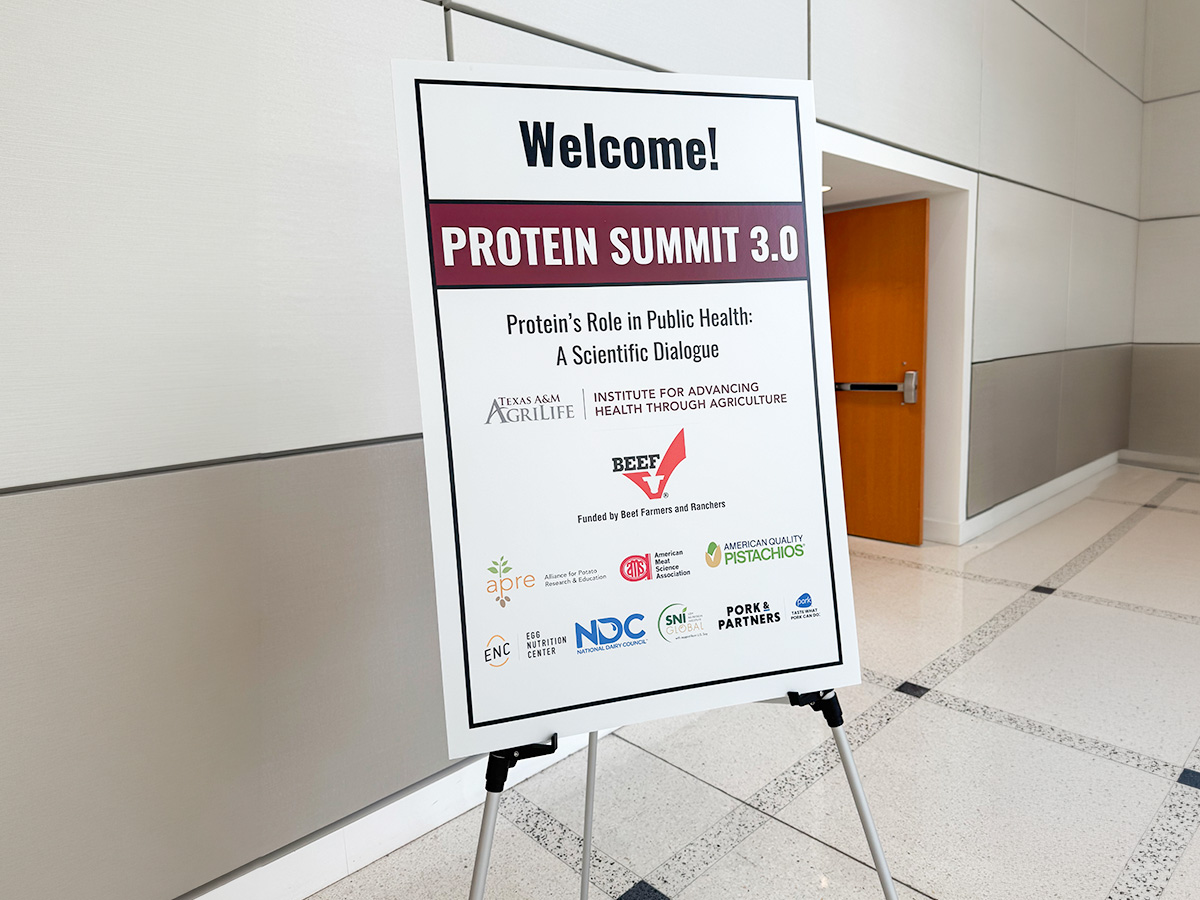
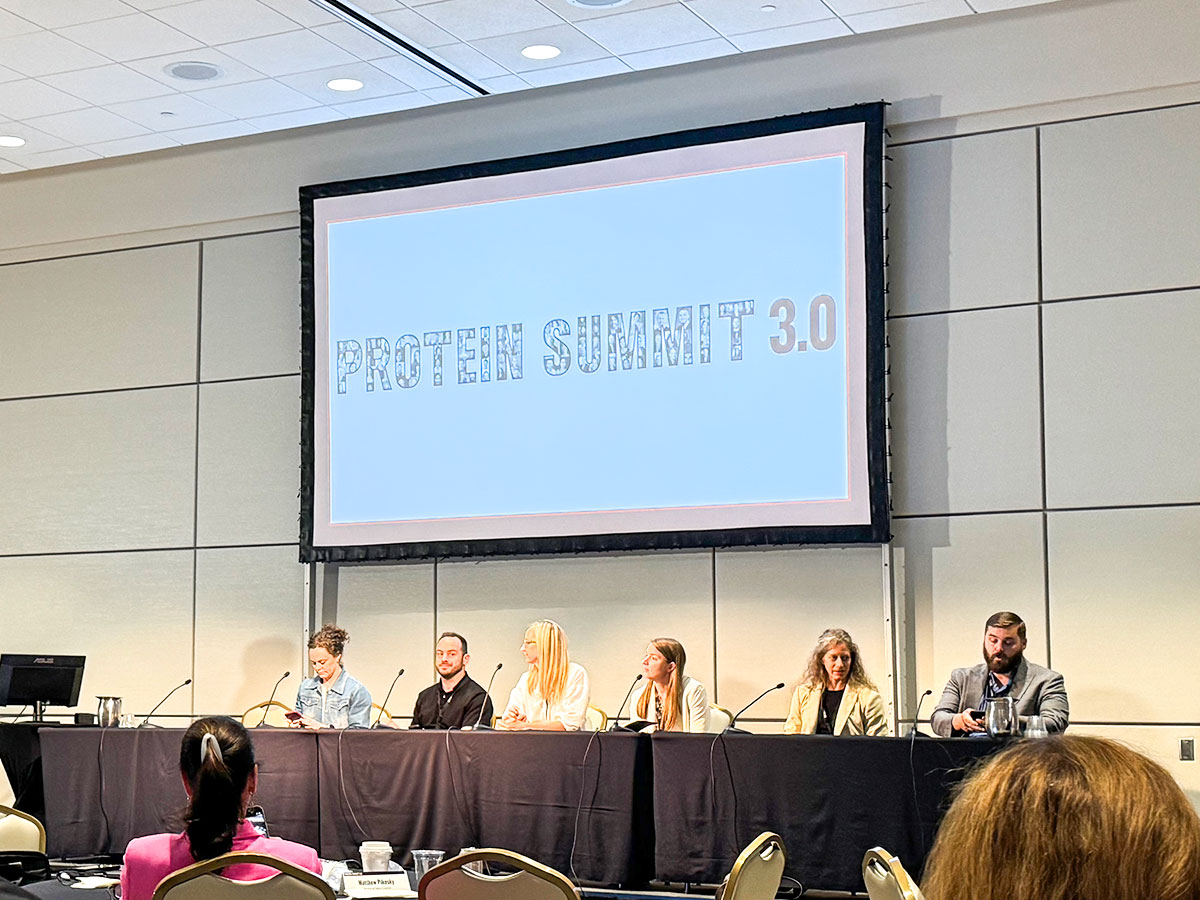
August 10–13, 2026 | College Station, Texas
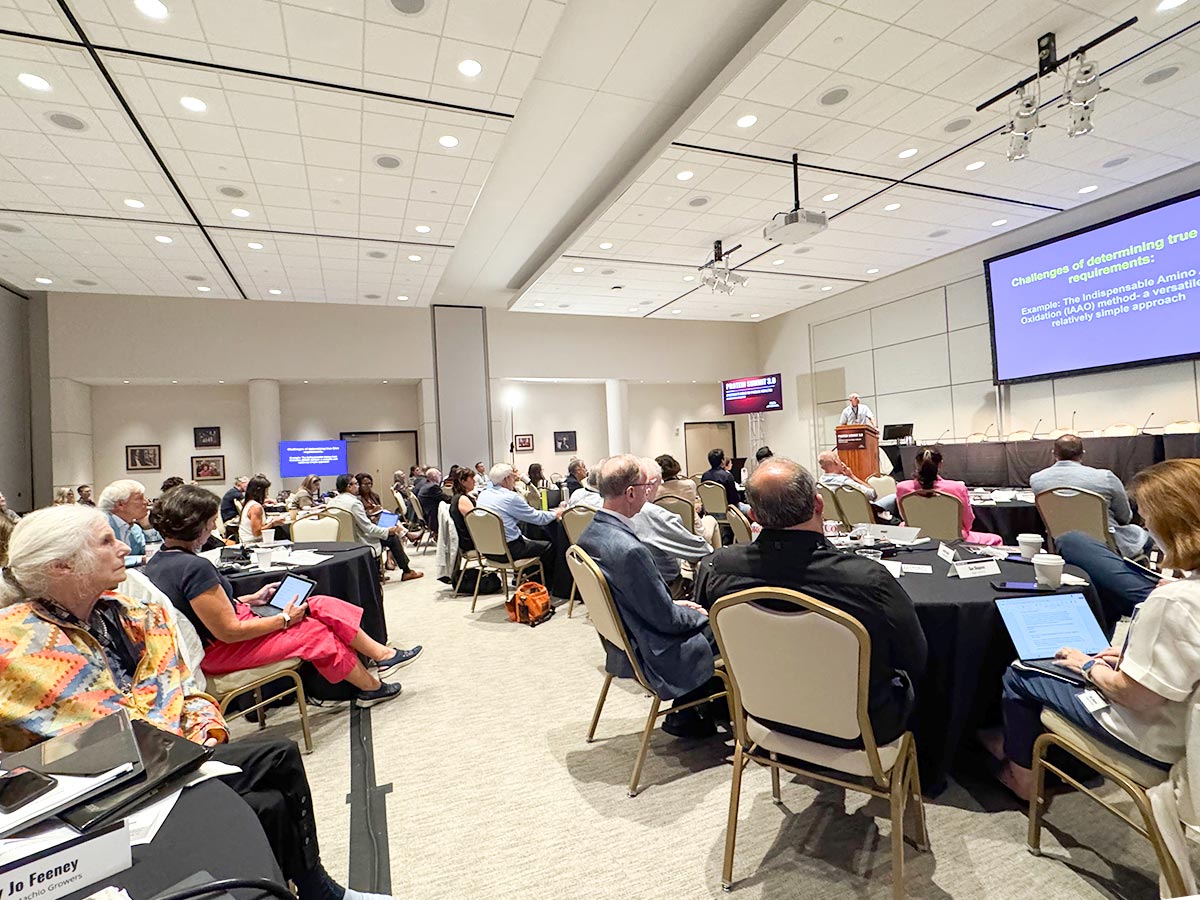
For APG, the meeting provided an important opportunity to build relationships with leading researchers and explore where pistachios can contribute to the evolving protein conversation. Following the summit, APG is continuing conversations with researchers to identify meaningful research opportunities and new ways to communicate the protein nutrition of pistachios to both scientific and consumer audiences.
Sleep continues to emerge as an important area of nutrition research. A newly published narrative review co-authored by APG Scientific Advisory Board member Marie-Pierre St-Onge, PhD, explores why pistachios may be an interesting whole food for future sleep research.
After reviewing nearly 100 scientific articles, the authors examined how the combination of nutrients and bioactive compounds found in pistachios—including vitamin B6, magnesium, fiber, tryptophan, polyphenols and phytomelatonin—may intersect with biological pathways involved in sleep.
Importantly, the review does not establish that eating pistachios improves sleep. Instead, it provides a scientific rationale for further investigation and outlines opportunities for future research, including randomized controlled human trials examining sleep quality, duration and timing; dose-response studies; and research into how factors such as cultivar, growing conditions and processing may influence key compounds.
The publication provides APG with a valuable roadmap for determining whether the emerging science can ultimately translate into measurable sleep benefits and represents another step toward expanding the body of research around pistachios and health.
Pistachio nutrition continues to gain attention in consumer media. Recent coverage includes:
The No. 1 High-Protein Snack to Eat — pistachios were highlighted as the top snack choice for adding plant-based protein to the diet.

The #1 Nut to Help Lower Blood Pressure, According to a Dietitian — pistachios were featured as the best nut to eat more of if you’re trying to lower blood pressure.
These placements help reinforce pistachios’ nutritional advantages and expand consumer awareness through credible, science-based media channels.
APG is introducing a new Conference access structure designed to recognize the value of membership, with preferred member pricing and member-exclusive exhibitor opportunities.
Attendee registration, exhibitor opportunities, sponsorships, and the hotel room block will officially open Tuesday, October 20, 2026.


Grower members will receive a Save the Date email from Cvent confirming they will receive the member registration link when attendee registration opens. If you do not receive the Save the Date email by Friday, October 9, please use the membership verification form on the Conference Webpage to submit your information and preferred email address. Our team will review your membership status and ensure confirmed members are included on the invitation list.

Associate Members can purchase or renew their 2027 Associate Membership to access member pricing. Renewal information and invoices will be sent soon to the primary contact we have on file for your company.

Exhibitor booths are reserved for APG members. Companies must have an active 2027 Associate Membership or qualify as an APG partner processor for exhibitor eligibility.
Membership status will be verified to maintain member pricing and exhibitor eligibility.

Not Currently an APG Member? Conference registration will remain open to the broader pistachio industry. Non-member growers may also be eligible for a preferred non-member rate through a participating processor. To learn more, speak with your processor representative or contact APG about available registration options.
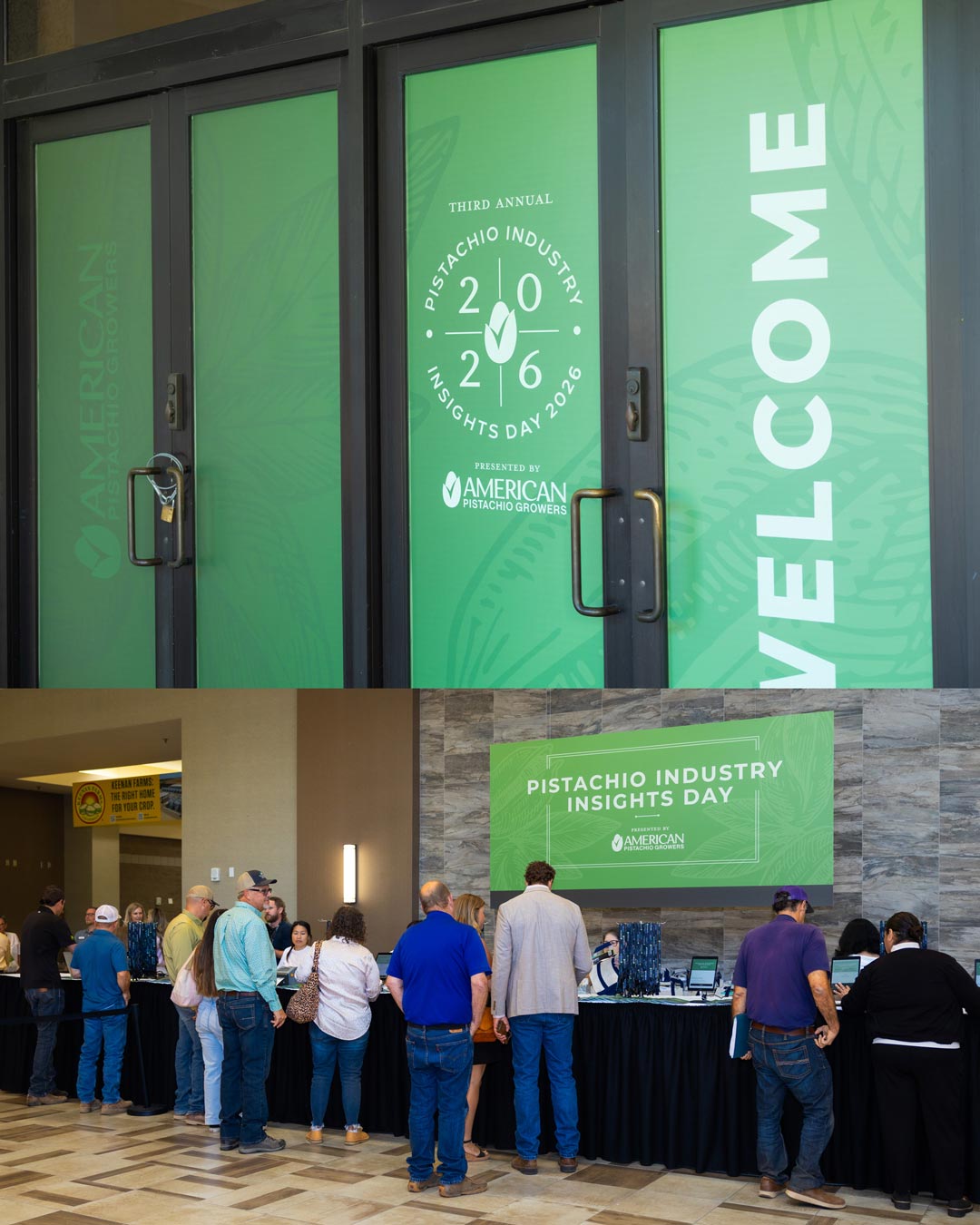
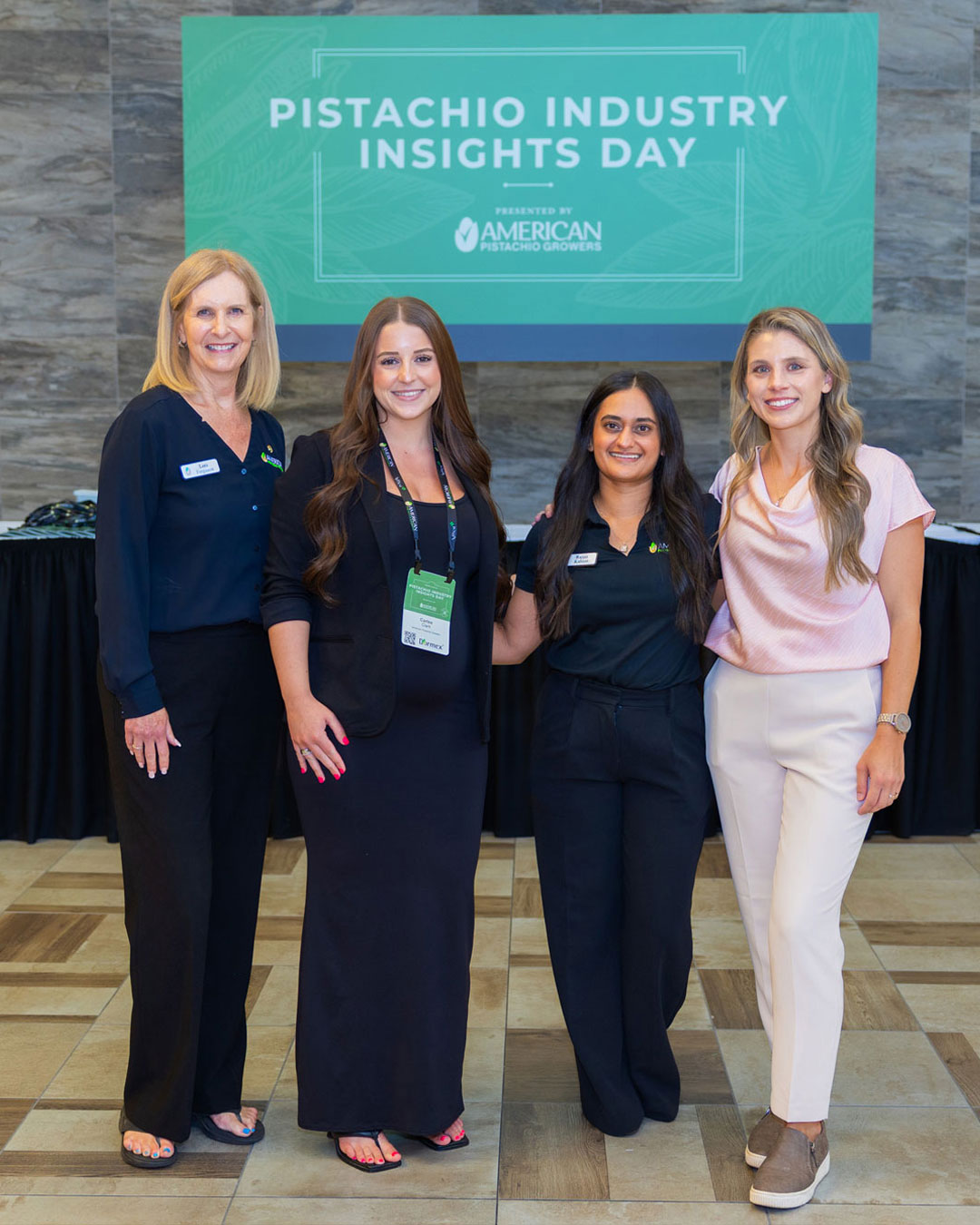
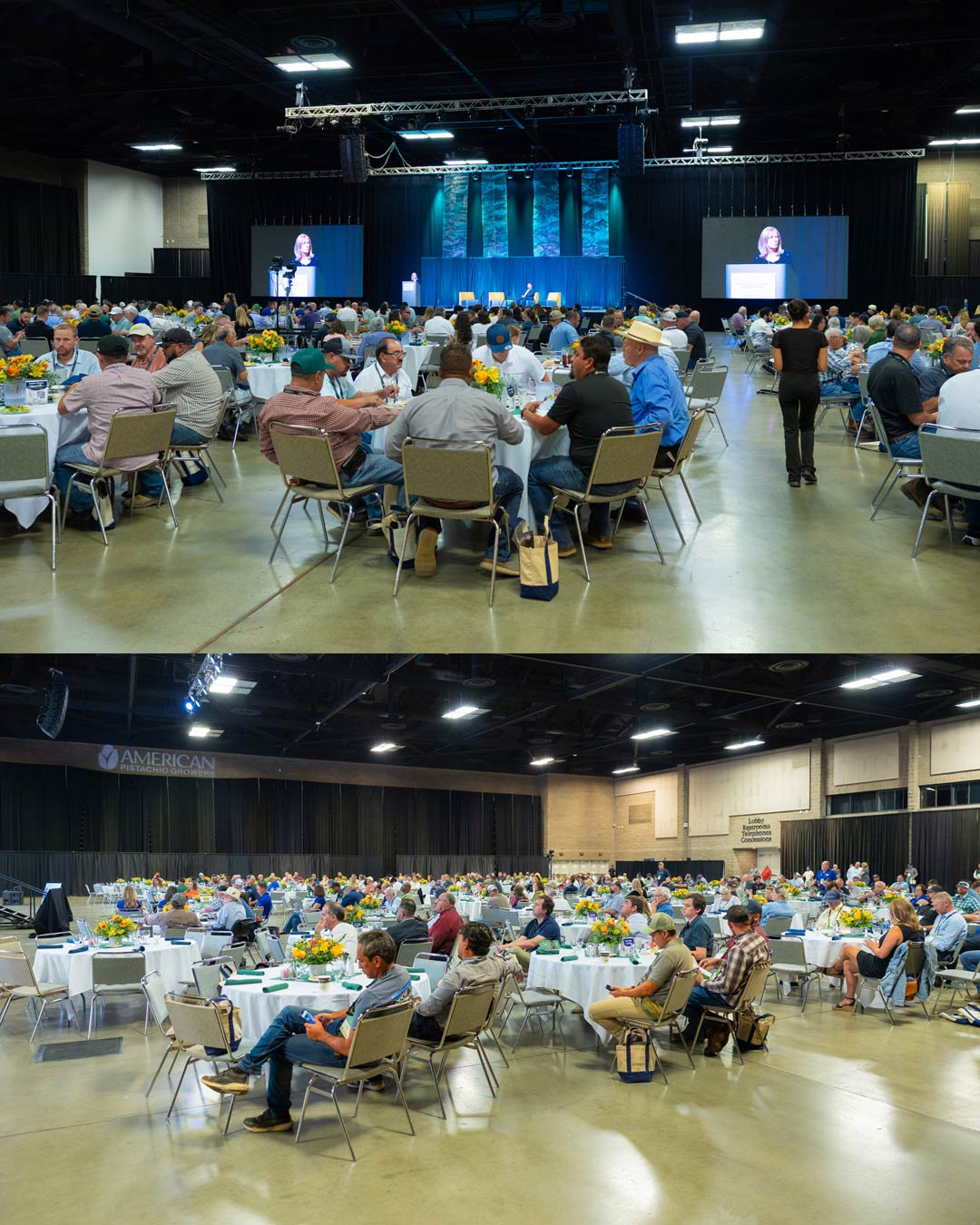
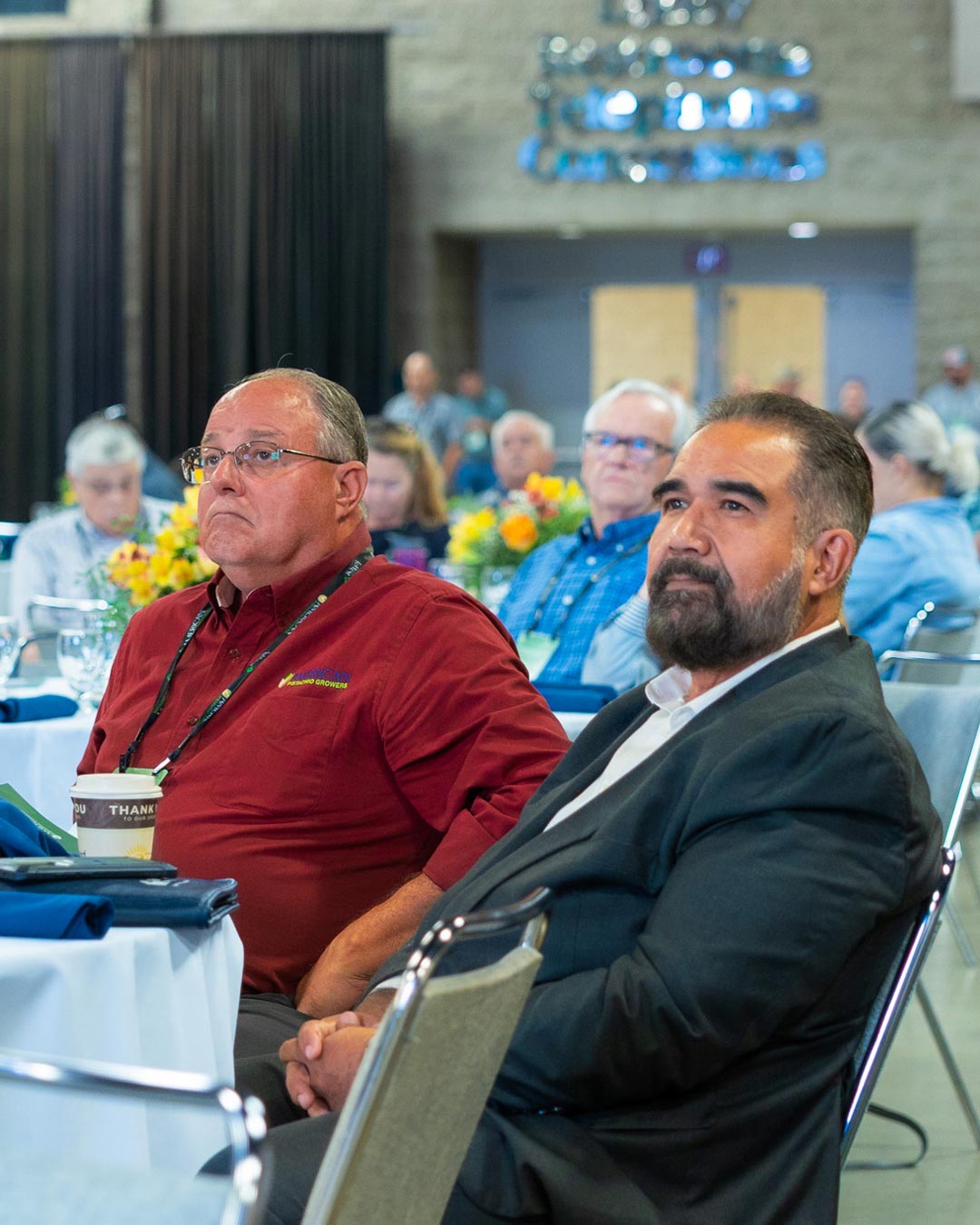
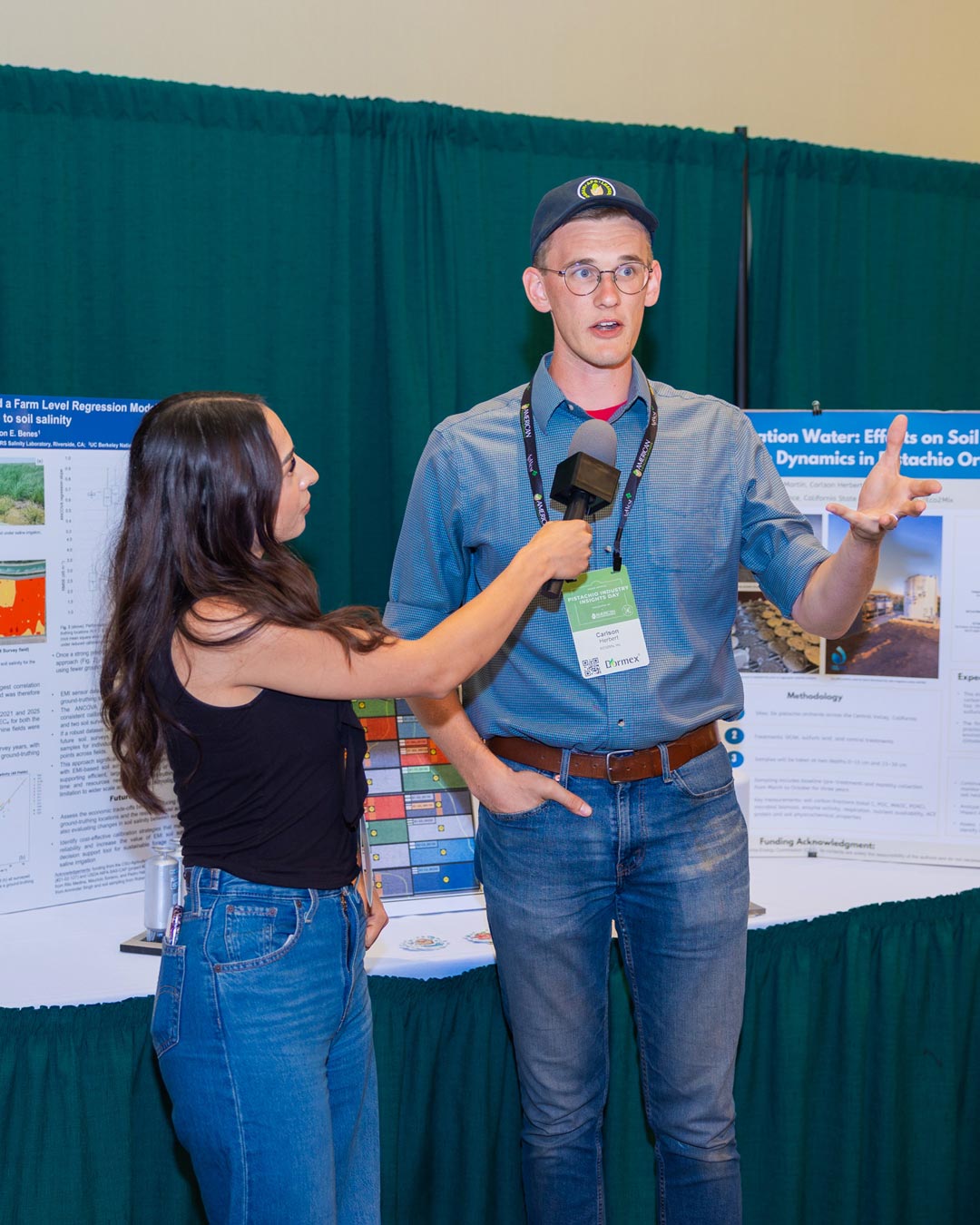
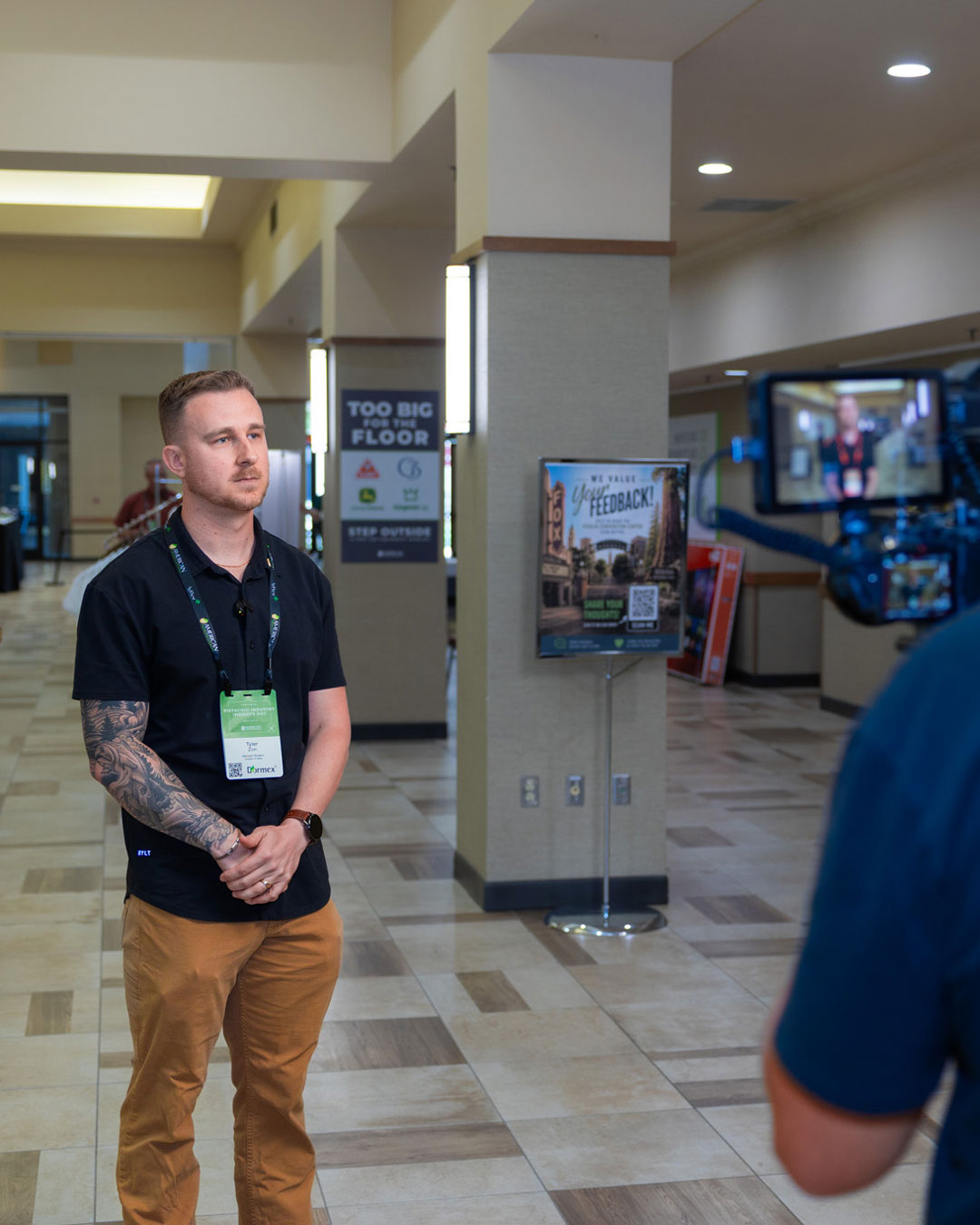
More than 600 growers and industry partners registered for the 2026 Pistachio Industry Insights Day, bringing the pistachio community together in Visalia for a day centered on relevant education, meaningful conversation, and valuable industry connections.
The program tackled issues and opportunities affecting pistachio growers today, from advocacy, market development, nutrition research, and sustainability to some of the most pressing challenges facing California agriculture. Congressman Adam Gray joined APG Vice President of Government Relations Cadee Condit for the morning Advocacy Breakfast, while APG leaders shared updates on the state of the industry, global markets, nutrition, and grower-focused initiatives.
Water became one of the day’s defining conversations. A packed room heard perspectives from state water leadership, agriculture, and the San Joaquin Valley Water Blueprint before Dorene D’Adamo, John Duarte, Dr. Eddie Ocampo, and APG’s Joe Coelho came together for a candid panel on water reliability, SGMA, infrastructure, implementation, and what comes next for the Valley. Attendees stayed engaged through audience Q&A, and post-event feedback made it clear that water remains a topic growers want APG to continue to focus on.
Education extended beyond the main stage through sponsored speaking sessions addressing issues that were especially relevant during the season, including research following the spring heat, the growing threat of golden mussels in California waterways, and the role of solar protectants and light management in pistachio production.
This year also brought a more elevated event experience. Expanded sponsorships and new large-format branding created visibility throughout the venue — from arrival and registration to hospitality areas, educational programming, exhibits, and networking spaces. Exhibitors and industry partners were woven throughout the day, giving attendees opportunities to discover new products and services, exchange ideas, and build relationships beyond the general session.
Attendee feedback reinforced what has made Insights Day a standout event for the pistachio community: valuable programming and meaningful opportunities to connect. A sincere thank you to our sponsors, exhibitors, speakers, and attendees for helping make this year’s Insights Day such an impactful and engaging event.
We hope to see you again next year!
Some of APG’s most important work happens behind the scenes — bringing together the resources, expertise, and industry representation needed to take on priorities that would be difficult for any individual grower to address alone.
Throughout the year, APG works across a broad range of priorities that directly contribute to the future of the industry. Government affairs efforts ensure pistachio growers have a voice in important policy and regulatory conversations, while ongoing nutrition research provides credible evidence APG can use to communicate the health benefits of pistachios. Those findings strengthen global marketing efforts by giving APG compelling, research-based messages to reach consumers, expand markets, and support demand for American pistachios around the world — helping broaden the marketplace and support long-term value.
APG’s sustainability work is focused on practical opportunities to support farm operations — from research aimed at improving orchard performance and productivity to identifying tools, resources, funding opportunities, and industry partnerships that can improve efficiency, productivity, and overall operational performance.
Being part of APG means being part of the work shaping what comes next for American pistachios. It is an opportunity to invest in the industry you have built your business around and help ensure the work happening today continues creating opportunities for the industry tomorrow.
Invest in what comes next.
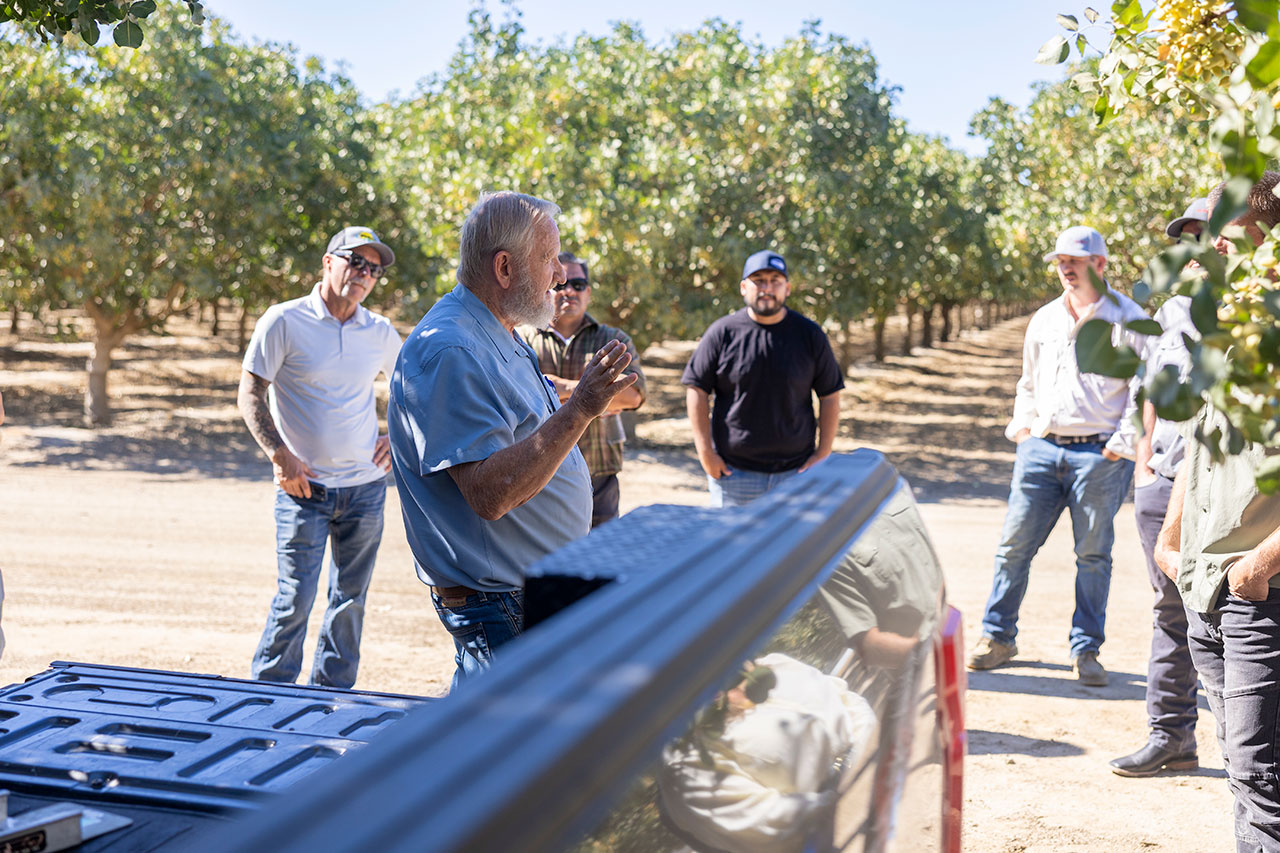
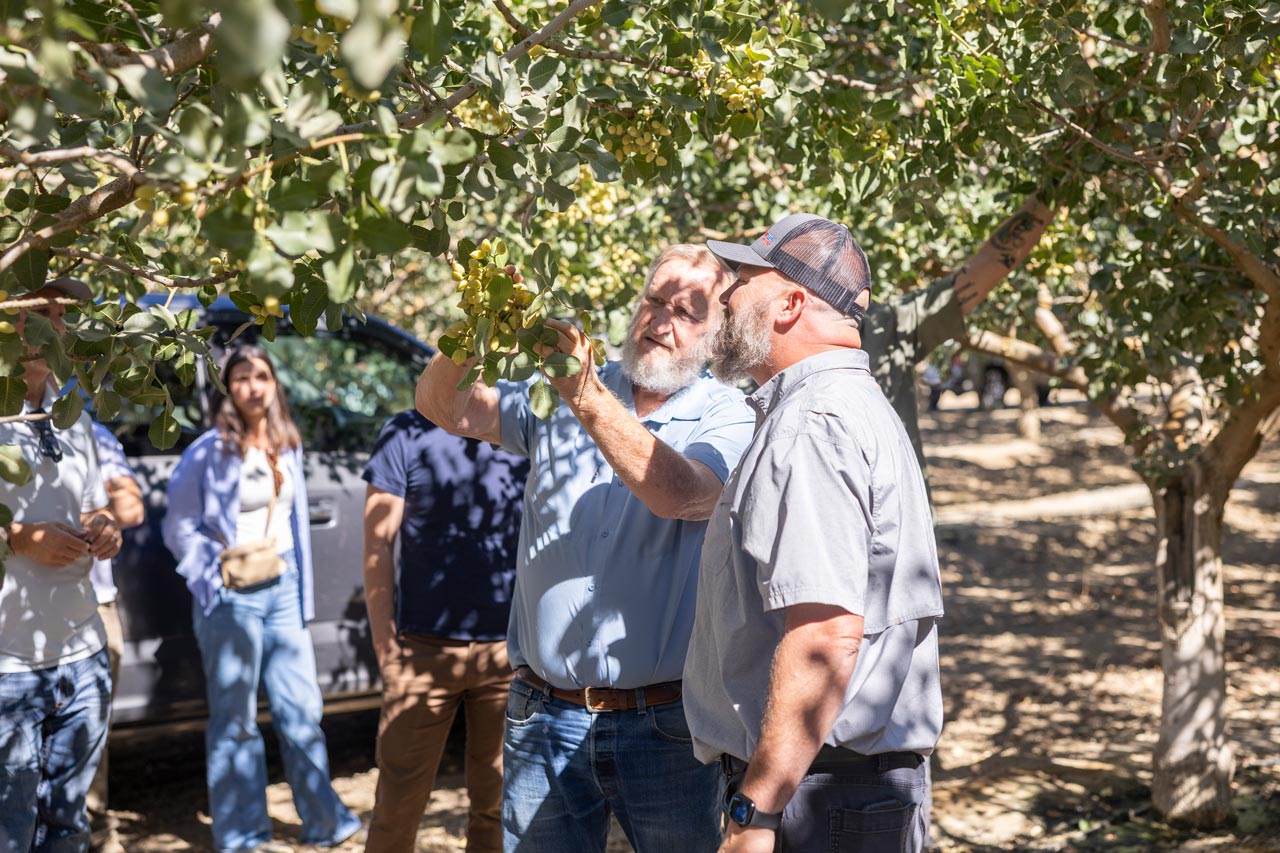
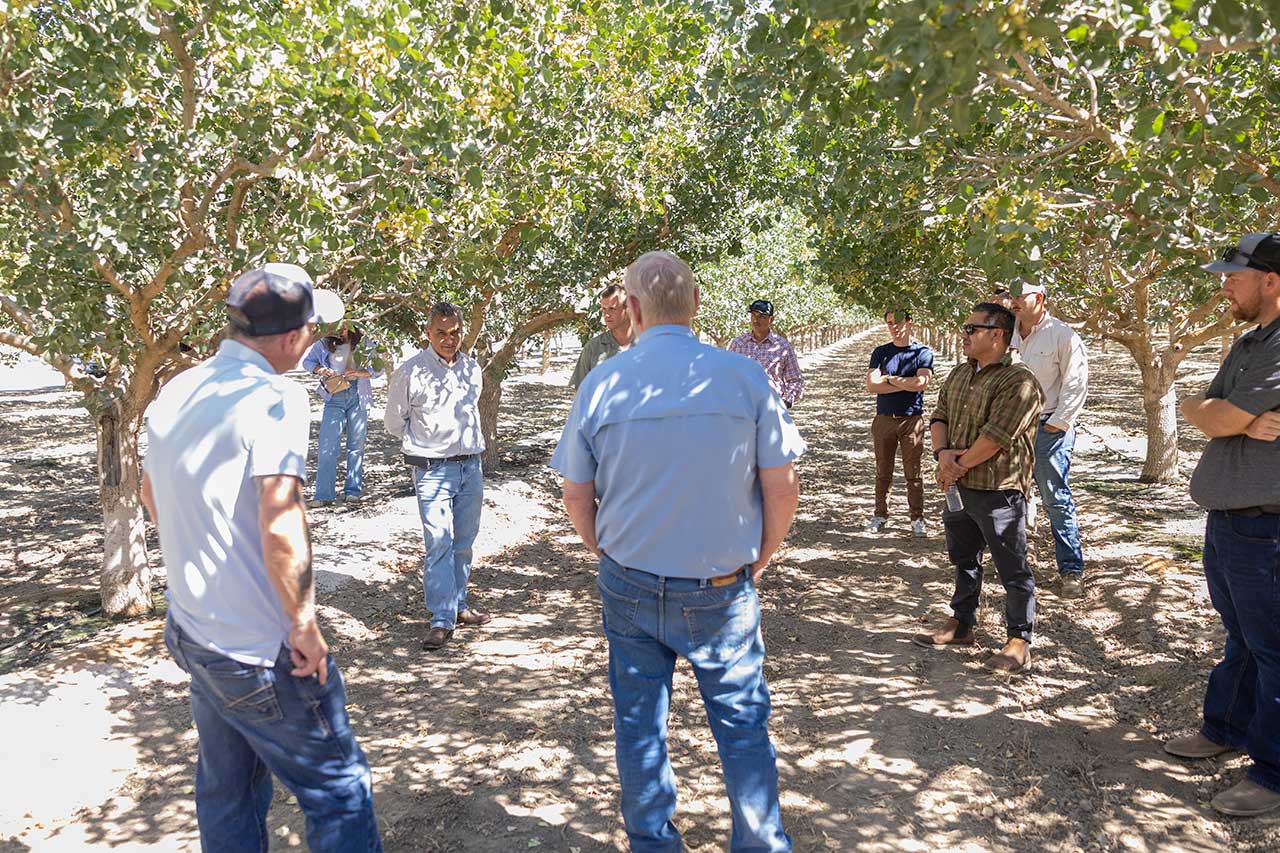
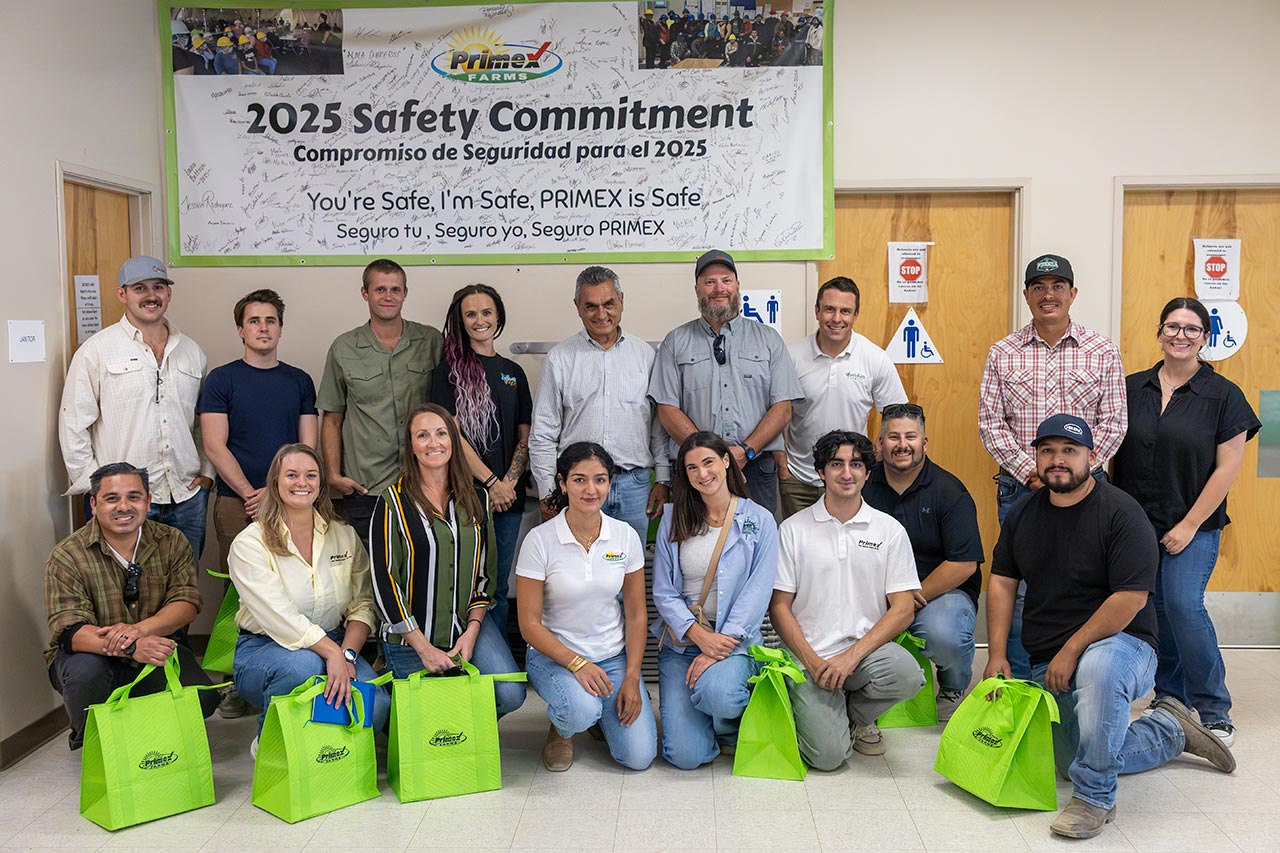
In July, LeadOn had the opportunity to tour Primex and learn more about the company’s operations and the agricultural industry. We began the day with an orchard tour led by Alan Scroggs, who provided valuable insight into the growing process and orchard management. Following the orchard tour, we visited the processing facility for a behind-the-scenes look at the various stages of processing and production. It was an informative and enjoyable day that provided our group with a greater understanding of Primex and the important work happening throughout the operation. We are grateful to Alan and the Primex team for sharing their time and expertise with LeadOn!
LeadOn hats and shirts are still available! Every purchase directly supports the LeadOn program, with funds helping to cover important program costs such as lunches, transportation, and other experiences that make LeadOn possible. Show your LeadOn pride by purchasing a hat or T-shirt!
To order your LeadOn hat or T-shirt, please email Hannah Doyle at hdoyle@americanpistachios.org

Follow APG’s grower-focused Instagram for event updates, industry information, helpful resources, and a closer look at the work happening across APG.
Joe Coelho, Director of Sustainability and Member Outreach
As a grower myself, I look at APG’s sustainability work through a practical lens. I want to know what will make us better growers, make our farms more efficient, protect our ability to farm and ultimately improve the financial sustainability of our operations. If something saves an input, what does it save in dollars? If a technology improves efficiency, does the improvement justify the investment? And if we are asking growers to change a practice, we should be able to explain the value it creates on the farm.
That is what I am trying to build through APG’s sustainability and research programs. We have an incredible opportunity to bring growers together with researchers, universities, technology companies, agencies and funding partners to work on problems that matter in commercial pistachio production. Our goal is not to duplicate good research already underway, but to identify practical gaps, leverage outside grant and research dollars wherever possible, and put those resources to work for growers. When we can identify a challenge, research and demonstrate a practical solution, and document its cost and benefit, that work also strengthens APG’s government affairs efforts. It gives Cadee and our team something tangible to take to policymakers when making the case for funding, incentives and programs that can help growers adopt proven solutions.
Grower involvement is an important part of this. Bring us the issues you are seeing on your farm and help us determine where APG should focus its efforts. Members interested in getting more involved can learn about joining the Sustainability Committee or simply attend a committee meeting and participate in the discussion. We want real grower problems and ideas at the table because that is what should drive this work.
In this month’s update, I want to focus on two issues that will have a significant impact on our industry: pest management and water. We have been working on both throughout the summer, from finding ways to reduce pesticide costs while maintaining control, to helping growers understand a rapidly changing water environment and make better use of the water available to them. They are different challenges, but the objective is the same: protect profitability, build resiliency and help our growers prepare for what is coming.
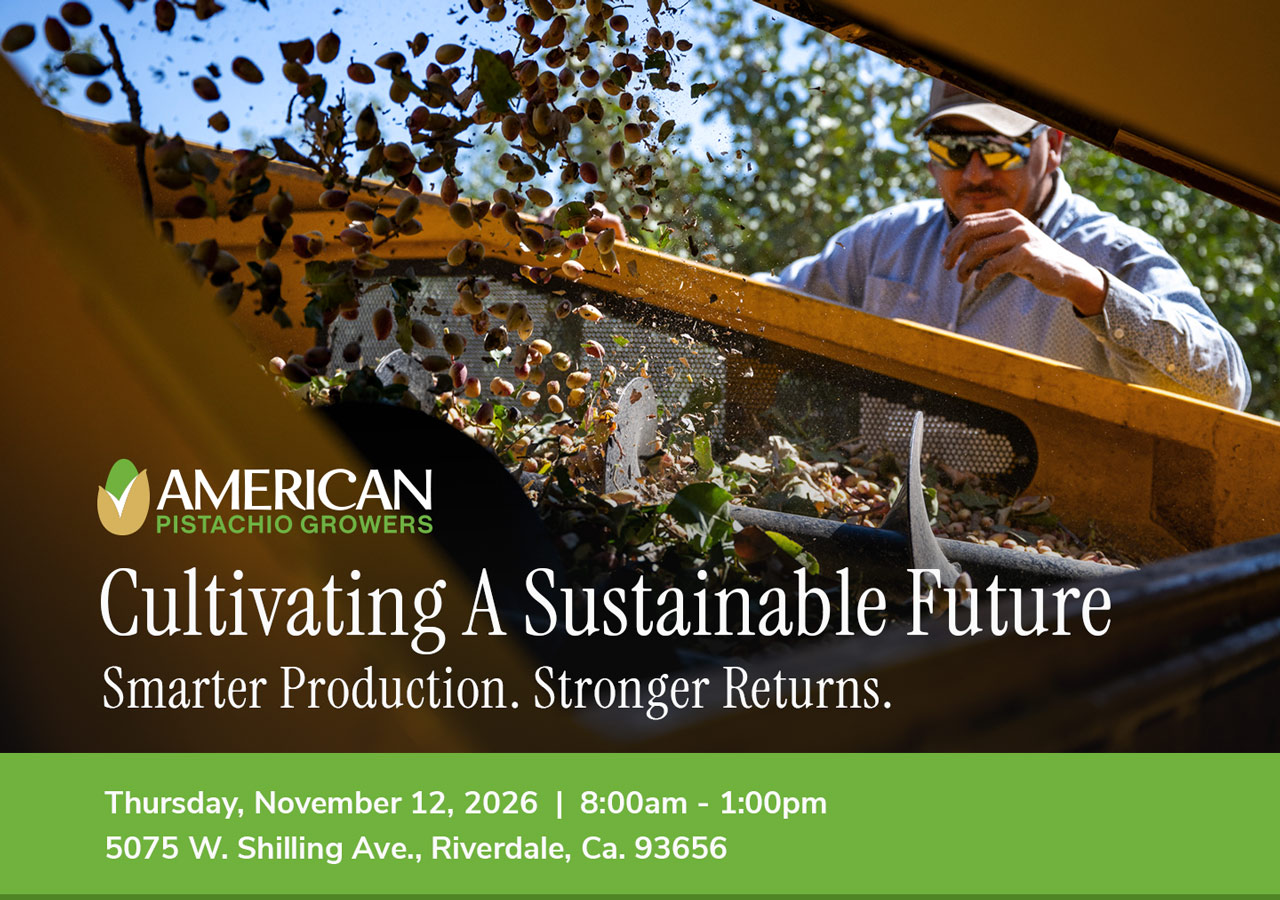
Join American Pistachio Growers on Thursday, November 12, 2026, in Riverdale for the APG Fall Grower Education Day, a complimentary educational event focused on practical strategies to help growers improve orchard productivity, resource efficiency, and profitability.
This will be a day of education, practical insights, and conversations focused on helping pistachio growers make informed decisions for the seasons ahead.
For the past two seasons, APG has been evaluating LiDAR-guided spray technology in commercial pistachio and almond orchards. Sensors identify where tree canopy exists and control individual nozzles so pesticide is directed toward the target rather than continuously spraying through gaps between trees or open space.
The purpose is straightforward: can we reduce pesticide use and production cost without sacrificing pest control?
Our previous work with USDA-ARS Research Entomologist Dr. Joel Siegel has demonstrated substantial reductions in applied spray material while maintaining very strong navel orangeworm control. This summer, we expanded both the research team and the scope of the project. UC Cooperative Extension’s Idong Mokwunye joined the work to evaluate Gill’s mealybug, allowing us to incorporate mealybug efficacy into our more recent carrier-volume study in mature pistachios.
The purpose is straightforward: can we reduce pesticide use and production cost without sacrificing pest control?
Our previous work with USDA-ARS Research Entomologist Dr. Joel Siegel has demonstrated substantial reductions in applied spray material while maintaining very strong navel orangeworm control. This summer, we expanded both the research team and the scope of the project. UC Cooperative Extension’s Idong Mokwunye joined the work to evaluate Gill’s mealybug, allowing us to incorporate mealybug efficacy into our more recent carrier-volume study in mature pistachios.
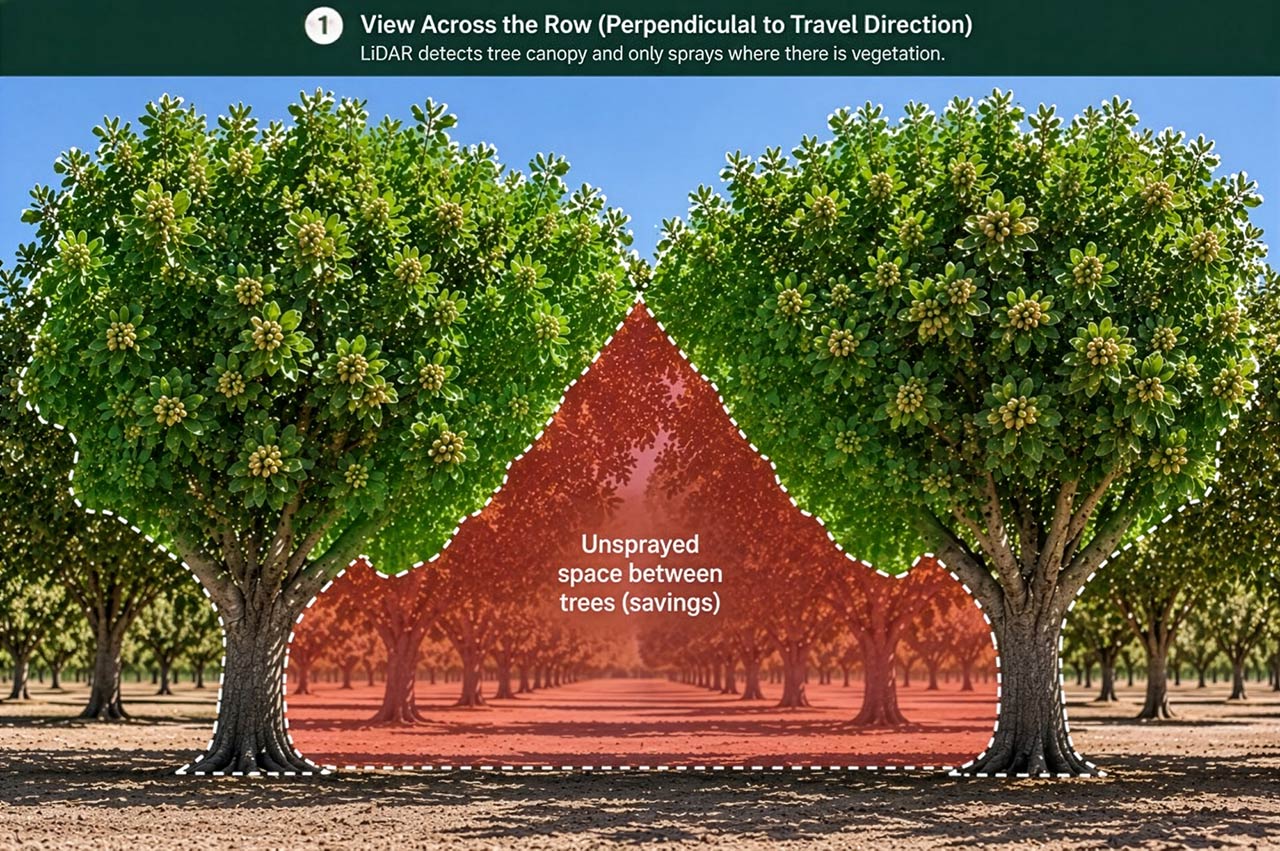
Image 1. Space between trees not targeted by LiDAR spray system. Untreated space also often includes area directly overhead of the spray rig.

Image 2. At this exact moment passing between trees, the side and top nozzles were turned off and spray is not wasted into thin air.
The new volume work is helping us answer several questions at once. Siegel continues evaluating NOW efficacy and residual control, while Mokwunye’s work allows us to evaluate Gill’s mealybug efficacy, coverage and the potential benefits of greater carrier volume. We are also asking whether higher volumes can improve coverage throughout the larger canopies of mature pistachio trees.
Historically, 200 gallons per acre has been a practical upper limit for many commercial nut crop applications. Higher volumes quickly become difficult and expensive because of tank capacity and refill time.
This summer, we evaluated conventional-equivalent calibrations of 100, 200 and 400 GPA in mature, 21st leaf Kerman. Initial measurements showed approximately 30% less applied spray at 100 GPA, 48% at 200 GPA and 64% at 400 GPA. At the 400-GPA calibration, actual tank consumption was only about 140 to 145 gallons per acre because the system was not applying material where canopy did not exist.
The value to growers is direct: reduced material cost, fewer tank refills, reduced labor and fuel demands, and less off-target application while maintaining crop protection. The importance of this work has also been recognized beyond APG, with John Deere Corporate selecting APG’s SmartApply pistachio trials for inclusion in its Annual Global Business Impact Report.
That gives us an opportunity to investigate whether greater carrier volume can improve coverage in large trees and potentially improve Gill’s mealybug management without the enormous refill burden normally associated with 400 GPA. At the same time, more water changes pesticide concentration, so Siegel’s continuing efficacy and residual bioassays are critical to understanding where the optimum actually lies. 2026 data is forthcoming from both Siegel assays and Mokwunye’s field evaluations.
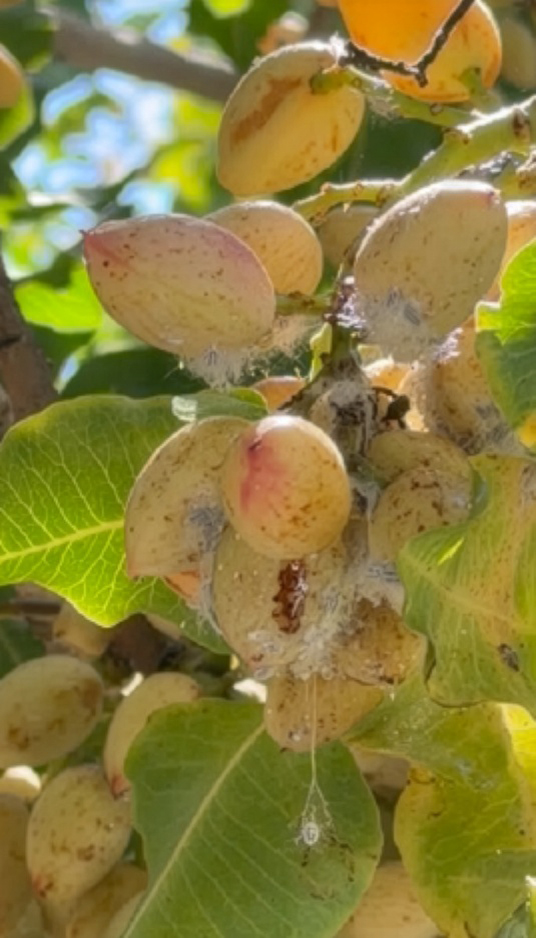
Image 3. Gill’s Mealybug at the time of trial application
What Could It Mean to the Grower?
Our two recent pistachio applications contained approximately $104 and $85 per acre in pesticide material. If chemical use scales proportionally with the measured reductions, the potential material savings across those two applications would be approximately $57 per acre at a 30% reduction, $91 at 48%, and $121 at 64%.
Those numbers do not include potential savings from fewer tank fills or other operational efficiencies, and they need to be weighed against the cost of the technology. That return on investment is exactly what we are trying to better understand.
There is also a straightforward environmental benefit. If we can maintain control while purchasing and applying less pesticide, we reduce the amount of material entering the production system while simultaneously reducing grower cost.
APG has applied for additional funding to continue and expand this work.
Alternative materials are another important part of this work. APG has been involved in grower demonstrations and evaluations involving Lime Sulfur for Gill’s mealybug, SpearLep and other biological tools for navel orangeworm, alternative fungicide programs for Alternaria and stain management, and additional materials that may fit into future pest management programs. Some products may become useful components of commercial programs, some may serve as maintenance tools or rotational options, and others may need more work before they can be recommended with confidence.
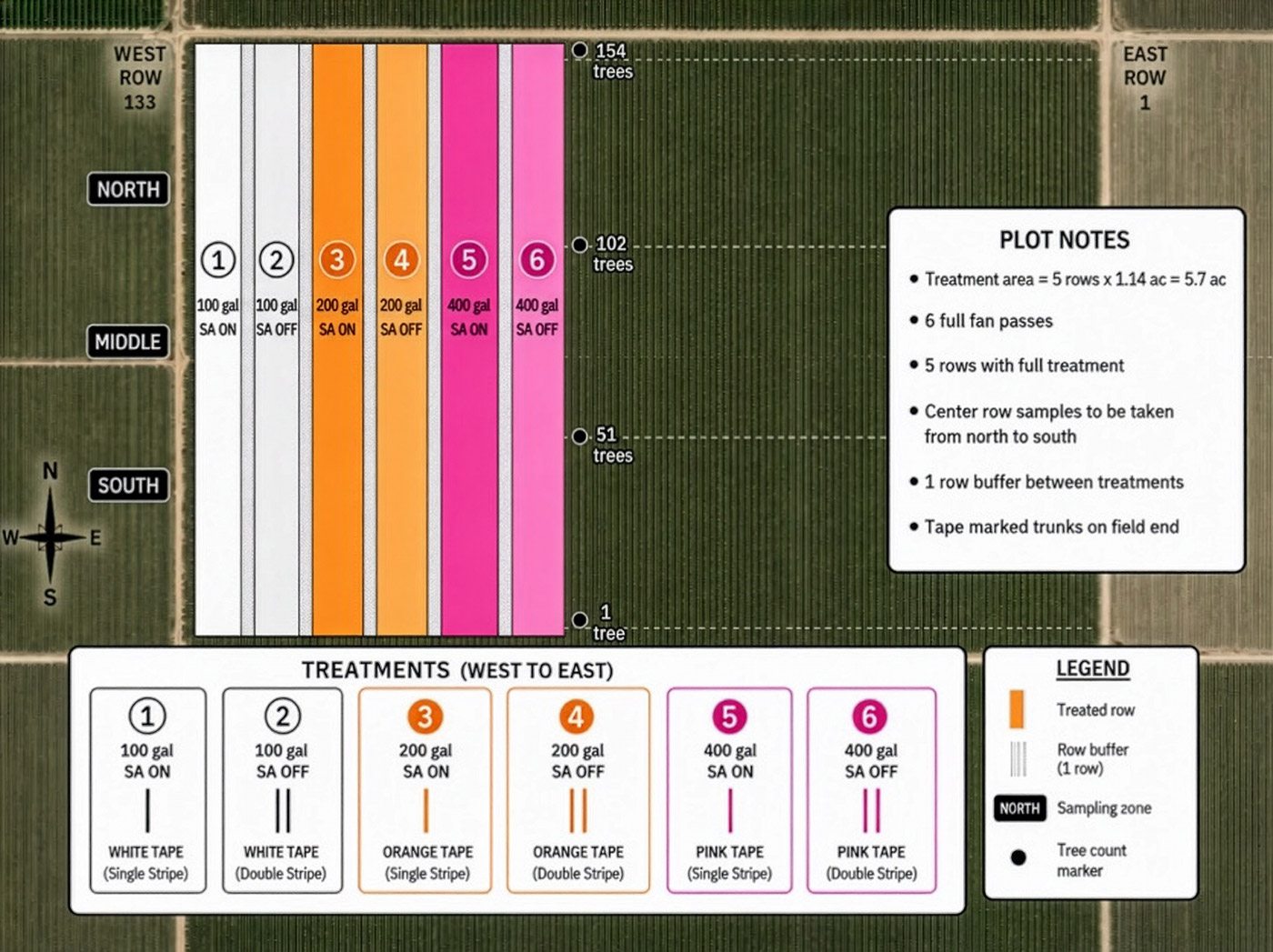
Image 4. LiDAR-sprayer volume experimental field design.
Precision Weed Control: Some Savings Are Easier to See
We have also continued evaluating optical weed-sensing technology such as WeedSeeker. Sensors identify green vegetation and activate individual nozzles only when a weed is detected rather than treating the entire orchard floor.
Our demonstrations have shown herbicide reductions ranging from approximately 30% to 80%, depending on orchard age, weed pressure and field conditions.
This is one of the more straightforward precision-agriculture technologies to evaluate. If the system identifies the weed, sprays it and kills it, the proof is fairly easy to see. The grower buys less herbicide, less pesticide is applied to the orchard floor, and effective weed control is maintained.
For growers interested in either canopy-sensing spray technology or precision weed control, APG can arrange demonstrations. Let us show you how these systems operate and where the economics may fit your operation.
Regional IPM: Better Information Before the Spray
Effective navel orangeworm (NOW) management starts with orchard sanitation, but it also depends on making timely treatment decisions throughout the growing season. This year, with the support of a $1 million CDFA Biologically Integrated Farming Systems (BIFS) grant, APG launched our Regional IPM decision-support system to help growers and PCAs across all nut crops make those decisions with better information.
The system brings together regional weather data, degree-day modeling, trapping information and crop phenology estimates to help growers understand NOW development and anticipate critical management windows. Its decision-aid tools are designed to provide advance alerts and text notifications so growers and PCAs can prepare for important pest and crop-development events rather than react after they occur. We are continuing to expand trap integration, including opportunities for growers to incorporate their own trapping information.
Throughout the season, I have also provided twice-monthly NOW updates through APG’s social media channels, generating numerous conversations with growers and PCAs looking to refine their treatment timing.
This is particularly important during the first two NOW flights, when almond PCAs play a critical role in managing regional pest pressure through timely mummy sprays and hull-split treatments. Sanitation establishes the foundation, but effective in-season control requires us to move beyond calendar-based spray schedules and use actual pest development, trapping activity and crop phenology to guide our decisions. Better timing in almonds sprays, particularly during flights 1 and 2, can help reduce the pest pressure that ultimately threatens the pistachio crop.
The economic opportunity is substantial. More precise treatment timing, as well as an entire decision aid system, can improve the value of every pesticide dollar spent while helping reduce unnecessary applications, crop damage and quality deductions. We believe improved regional coordination can contribute to better NOW management across the industry, and we will continue collecting data to evaluate the program’s impact.
We want more growers and PCAs involved. Although the program began in specific pilot regions, participation is open to growers throughout the Valley and across all nut crops. Contact APG to enroll, access the decision-support system and learn how to incorporate these tools into your pest-management program.
What Happens in Tule May Not Stay in Tule
Water conditions across the Central Valley continue to become more complicated, more localized and, in many cases, more expensive. But one situation deserves particular attention right now because it may provide a glimpse of what SGMA implementation can ultimately look like when subsidence threatens critical infrastructure.
The Tule Subbasin has been under State Water Board probation since 2024, but the discussion has now moved well beyond reporting and fees. State Water Board staff are developing an interim-plan approach that could begin with a groundwater pumping moratorium within at least two miles of the Friant-Kern Canal. The concern is subsidence and the continued loss of capacity in a canal that delivers water throughout the eastern San Joaquin Valley.
Current discussions contemplate a two-phase approach. The first phase would address pumping immediately surrounding the Friant-Kern Canal, while a second phase could impose broader pumping reductions across the Tule Subbasin as groundwater use is brought toward sustainable levels. Local GSAs are working on an alternative proposal in an effort to address the subsidence problem locally rather than operate under the state’s proposed restrictions.
For agriculture, this is worth watching closely. We have spent years talking about SGMA in terms of allocations, fees and eventual reductions in pumping. A restriction that prevents pumping in a specific area because of subsidence would move the conversation into a much more immediate operational reality for affected farms.
Tule is not the only story. Across the Valley, agencies are implementing different combinations of groundwater allocations, pumping charges, metering, well registration, parcel-level water accounting and penalties. The details are increasingly GSA-specific.
That is why APG is investing heavily in water communications.
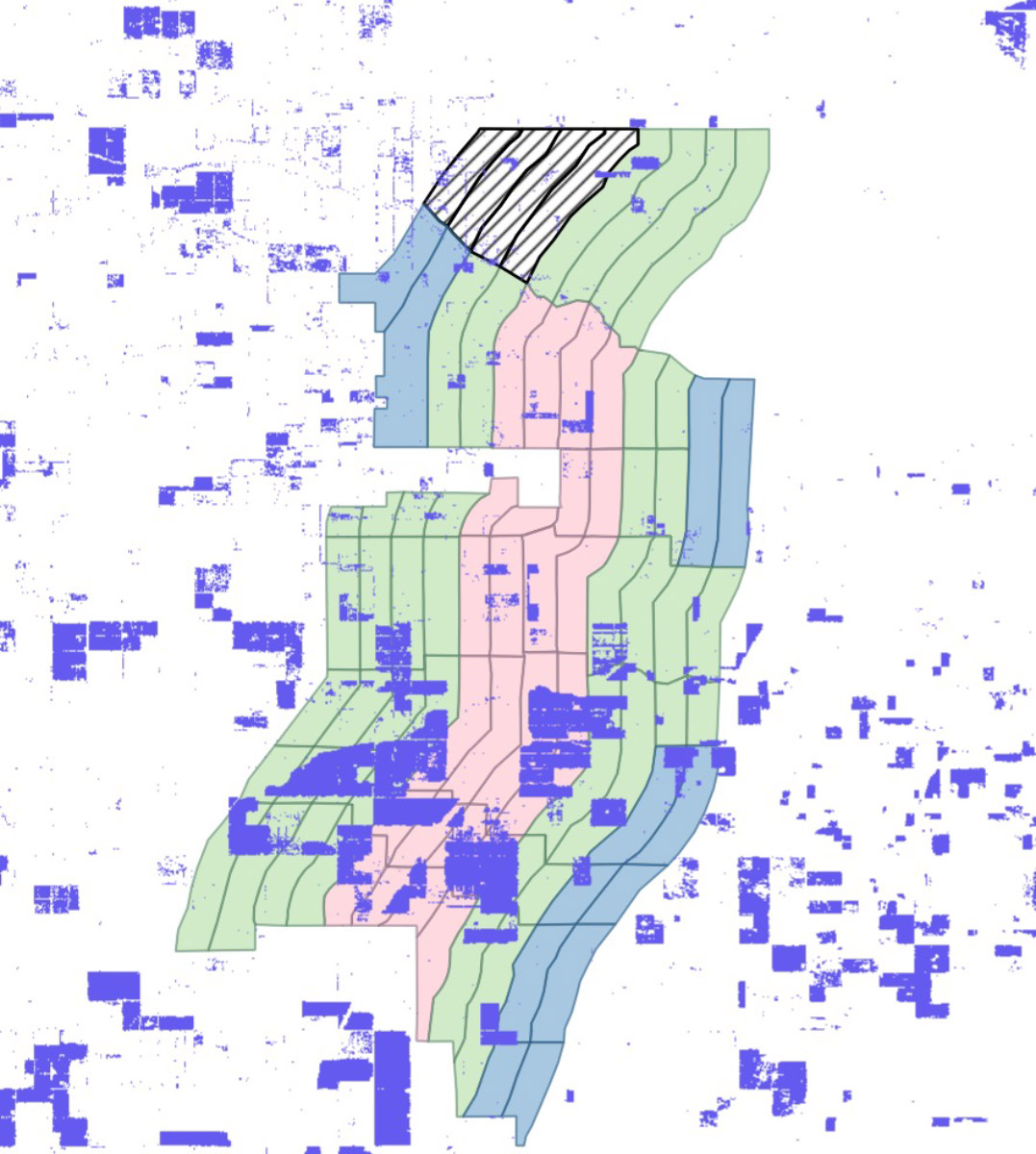
Image 5. Subsidence management zone in Tule Lake Subbasin. Purple polygons are pistachio fields- those within two miles of the Friant Kern may face a pumping moratorium.
Education, Advocacy and Putting Better Tools on the Farm
Our water work this year has extended well beyond the monthly reports.
In June, APG hosted a Water Education Day focused on both farm management and the larger water picture, including on-farm recharge and practices such as cover crops that may improve infiltration and recharge potential.
We have also hosted an irrigation-management field day and webinar focused on irrigation management and automation. At Insights Day, we brought major water-policy perspectives directly to growers, including representatives from the State Water Resources Control Board, Water Blueprint for the San Joaquin Valley and other water leaders.
Those conversations matter because growers need both sides of the equation. We need to understand and engage in the policies determining how much water may be available, while becoming better at managing whatever water remains available to the farm.
Depending on source and availability, water can range from roughly $200 to $1,000 or more per acre-foot. At those prices, irrigation efficiency has a very real return on investment.
Soil moisture or soil tension tells us part of the story. ET tells us another part. But we increasingly have the ability to measure the plant itself through tools such as dendrometers and other plant-stress and water status measurements.
If we are not measuring plant stress along with the soil and atmospheric demand, there is still a piece of the irrigation decision that we are estimating.
APG has associate members working with soil-moisture monitoring, irrigation automation, flow and pressure measurement, plant-stress sensing, ET and advanced analytics. If you are interested in adding these tools to your operation, we can help connect you with companies working in this space.
The objective is not technology for technology’s sake. It is to determine whether better information can help us maintain production with fewer unnecessary irrigations, improve timing, manage stress more deliberately and get more crop value from every acre-foot.
Soil Health Is Also a Water Project
Water is also one of the major reasons APG launched the Soil Health Deep Dive.
This is a commercial-scale research platform designed to look beyond individual products or isolated soil measurements. We are evaluating different soil-health approaches while measuring yield, nitrogen-use efficiency, infiltration, salinity at depth, soil moisture, plant response, soil biology and other indicators.
The water questions are central. Can improved soil condition increase infiltration? Can we improve rooting or water movement? Can certain practices help manage salinity? Can we improve crop water productivity?
Then we have to put economics around the answer.
If a practice improves infiltration but costs more than the resulting benefit, adoption will be difficult. If another practice improves water or nutrient efficiency enough to offset its cost, that is a much more sustainable outcome.
The Deep Dive is designed to identify those relationships and, just as importantly, the points of diminishing return.
Annual Conference: Building a Grower SGMA Toolbox
Water will again be a major focus at the APG Annual Conference, but this year we want to make the session much more specific to the individual grower.
We are developing a Grower SGMA Toolbox focused on practical information such as understanding allocations, fees, water accounting, compliance timelines, recharge opportunities and the tools available to understand your own GSA.
We are also working toward GSA-specific breakout sessions. Rather than asking growers from very different groundwater basins to sit through the same generalized discussion, we want localized groups to have an opportunity to sit down with people familiar with their GSA, ask questions and understand what the rules mean for their farms.
The goal is for growers to leave knowing where they stand, what is changing, what actions are available and who they need to talk to.
For the past two seasons, APG has been evaluating LiDAR-guided spray technology in commercial pistachio and almond orchards. Sensors identify where tree canopy exists and control individual nozzles so pesticide is directed toward the target rather than continuously spraying through gaps between trees or open space.
The purpose is straightforward: can we reduce pesticide use and production cost without sacrificing pest control?
Our previous work with USDA-ARS Research Entomologist Dr. Joel Siegel has demonstrated substantial reductions in applied spray material while maintaining very strong navel orangeworm control. This summer, we expanded both the research team and the scope of the project. UC Cooperative Extension’s Idong Mokwunye joined the work to evaluate Gill’s mealybug, allowing us to incorporate mealybug efficacy into our more recent carrier-volume study in mature pistachios.
The purpose is straightforward: can we reduce pesticide use and production cost without sacrificing pest control?
Our previous work with USDA-ARS Research Entomologist Dr. Joel Siegel has demonstrated substantial reductions in applied spray material while maintaining very strong navel orangeworm control. This summer, we expanded both the research team and the scope of the project. UC Cooperative Extension’s Idong Mokwunye joined the work to evaluate Gill’s mealybug, allowing us to incorporate mealybug efficacy into our more recent carrier-volume study in mature pistachios.
Rootstock & Pruning Trial
APG and UC Cooperative Extension have also established a new long-term demonstration orchard comparing seven pistachio rootstocks: Yankee, UCB1 seedling, Platinum, V214, V211, D71 and D110. Each rootstock has six replications of eight trees, for 48 trees per rootstock and 336 experimental trees overall. Half of the replications will be trained using modified central-leader pruning and half using conventional pruning.
As the orchard develops, UC Cooperative Extension’s Mae Culumber will lead evaluations of rootstock characteristics and performance. But we designed the site to be more than a research plot. It will also serve as a permanent grower demonstration orchard where APG can hold pruning field days and growers can see these rootstocks developing side by side under the same soil, irrigation and management conditions.
We also want nurseries, processors, PCAs and other industry representatives to use the orchard as a resource. If a grower is considering a new planting and wants to see how Yankee compares with Platinum, UCB1 or one of the newer rootstocks, bring them out and look at the trees. As this orchard matures, its value should increase every year because growers will be able to make those long-term decisions based on direct comparisons rather than looking at rootstocks growing in completely different orchards and conditions.
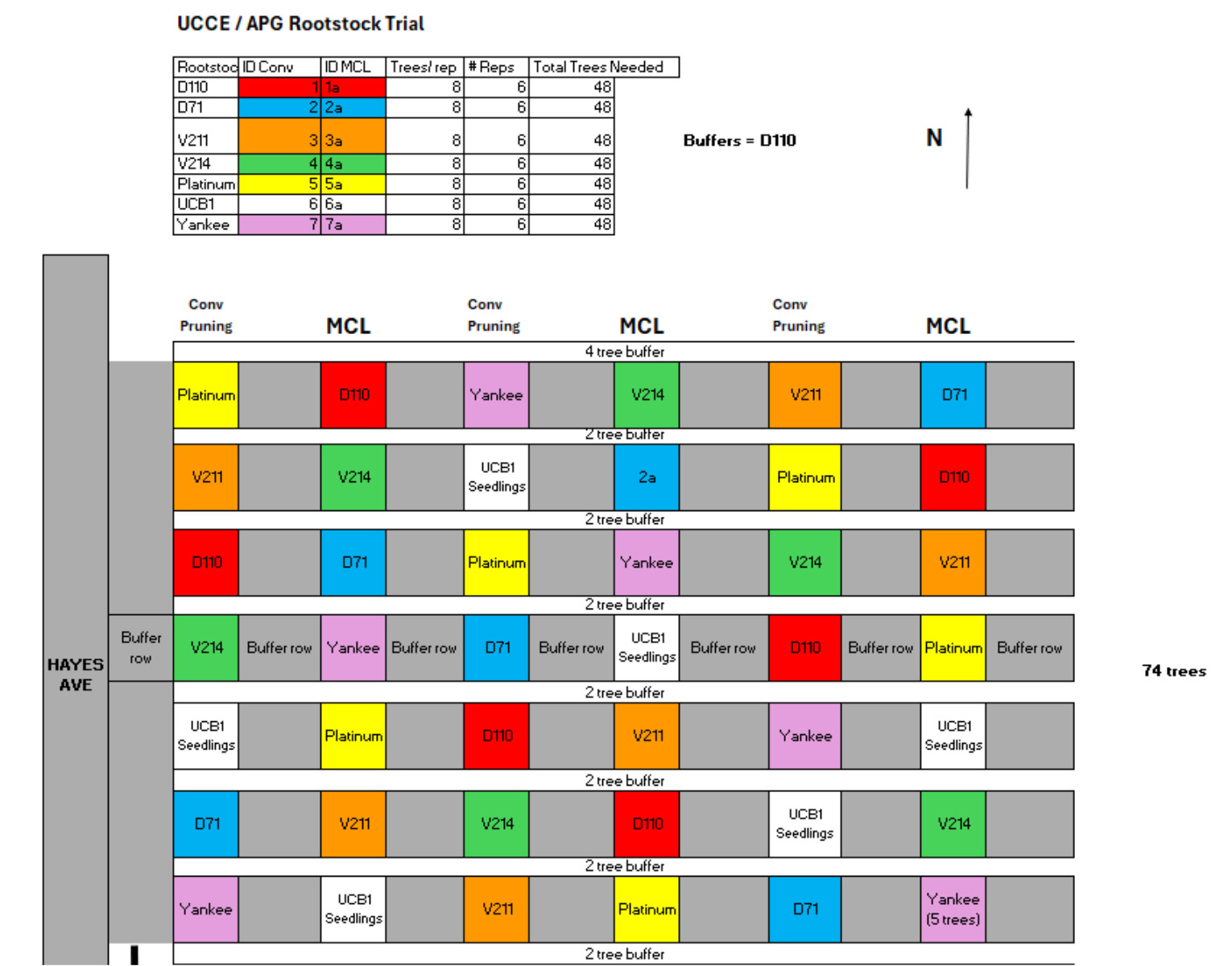
Image 6. Rootstock and pruning demonstration site.
APG has a growing number of research, demonstration and technical resources available to members. Whether you want to evaluate a new technology, improve an existing practice or simply sit down and take a fresh look at an agronomic challenge, we want growers to take advantage of them.
As we move into the next season, APG will continue looking for opportunities to help growers improve productivity, reduce costs and make better use of the resources available to them. Whether it is a new technology, a production practice or a challenge you are facing on your own farm, I encourage you to reach out. Your input helps us determine where to focus our research, education and demonstration efforts. Whether you have a question, an idea or something you would like us to look at on your farm, let’s start the conversation.
Wishing you all a successful harvest and a strong finish to the season. I look forward to seeing you at our upcoming events and continuing this work together.
Best regards,
Joe Coelho
Director of Sustainability & Member Outreach
559.260.5114
jcoelho@americanpistachios.org